

Healthy soil sits at the heart of productive, resilient agriculture across Australia. Globally, soil supports over a quarter of the world’s biodiversity, underpins 95% of our food production, and sustains the landscapes and livelihoods that define our region. For producers in Tropical North Queensland, soil health isn’t just a technical concept, it’s the difference between paddocks that bounce back after tough seasons and those that continue to decline.
Across the north, soils face ongoing pressure from erosion, declining groundcover, acidification, salinity, nutrient loss and the increasing impacts of a hotter, drier, more variable climate. Once degraded, soil takes generations to rebuild. That’s why the Australian Government has developed the National Soil Strategy, the country’s first framework dedicated to protecting, restoring and valuing our soils for the long term.
The Strategy focuses on three key goals:
This national approach is backed by the National Soil Action Plan 2023–2028, which provides clear, practical priorities for the next five years.
These include:
For Tropical North Queensland farmers and land managers, this national direction translates into practical on-ground benefits. Improved soil data and mapping will support more informed decisions about grazing pressure, cropping rotations, inputs and landscape management. Increased focus on sustainable practices will help producers adopt methods that protect soil structure, maintain groundcover and build carbon, all critical for drought and climate resilience. Investments in extension, training and regional capability will strengthen the advice and support available to producers across the north.
Healthy soils mean healthier pastures, more reliable production, stronger natural capital and landscapes that can better withstand dry spells and extreme weather. By working together, producers, researchers, government and regional networks like the TNQ Drought Hub can protect the soil that supports our communities today and ensures a productive, resilient future for northern Australia.
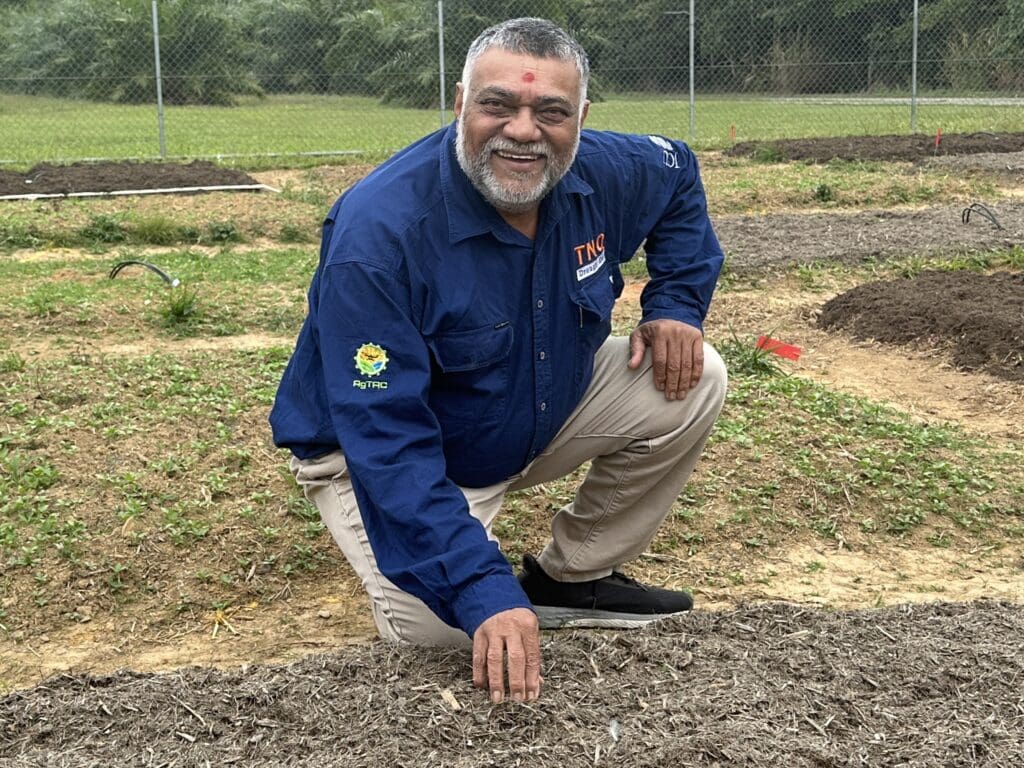
I am a qualified agricultural scientist with nearly 40 years of experience across India, New Zealand, and Australia. My background spans crop production, crop protection, Integrated Pest Management, and agronomy. I specialise in promoting soil health by balancing the chemical, physical and biological aspects of soil for cost-effective production in horticultural and pasture crops.
During my 13 years in New Zealand, I applied my knowledge and practical experience in soil health and beneficial microbes to successfully control soil-borne diseases such as Sclerotinia minor (Bacillus spp.) in lettuce crops using Bacillus species.
Later, as an agronomist for Donovan Avocados in Bundaberg for five years, I effectively controlled Phytophthora root rot and optimised soil moisture retention, leading to improved fruit size and quality. I also reduced fruit drop by improving soil health through increased organic matter, carbon levels, and beneficial microbe populations.
My work as the Regional Soil Coordinator see me collaborating closely with the seven natural resource management groups in our region and other local organisations to deliver soil extension and management activities that support drought and climate resilience.
A network of Regional Soil Coordinators across Australia provide support for the agricultural industries in their local area. Each Regional Soil Coordinator is linked with the local Drought Resilience Adoption and Innovation Hub. Their purpose is to:
The Regional Soil Coordinators are supported by the Australian Government through funding from the Climate-Smart Agriculture Program under the Natural Heritage Trust.