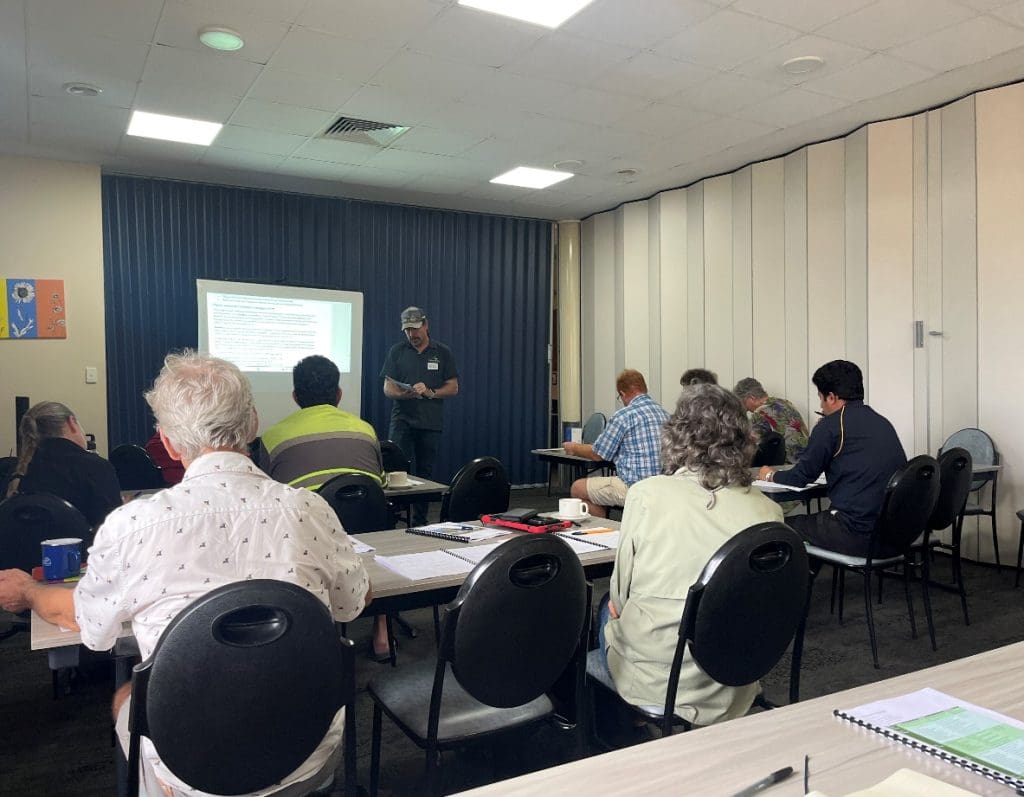


Practical ideas, local knowledge and strong industry connections were at the centre of Gulf Savannah NRM’s Unlock Your Farm’s Full Potential workshop in Mareeba, where producers came together to explore ways to improve productivity, strengthen soil health and plan for the future.
The free workshop, delivered by Farmacist through Gulf Savannah NRM’s Climate-Smart Agriculture Project, brought together growers, graziers and industry professionals to discuss practical approaches to managing the challenges of farming in Far North Queensland’s variable climate.
The Tropical North Queensland Drought Resilience Adoption and Innovation Hub’s Regional Soil Coordinator, Dhiraj Gajera, attended the workshop to connect with producers, understand local priorities and build relationships that support ongoing soil health and farm resilience initiatives across the region.
“The workshop created a great opportunity to have one-on-one conversations with producers about the challenges they’re facing on their properties,” Dhiraj said.
“By listening to local priorities and sharing practical information about soil health, we can better connect producers with the knowledge, tools and support they need.”
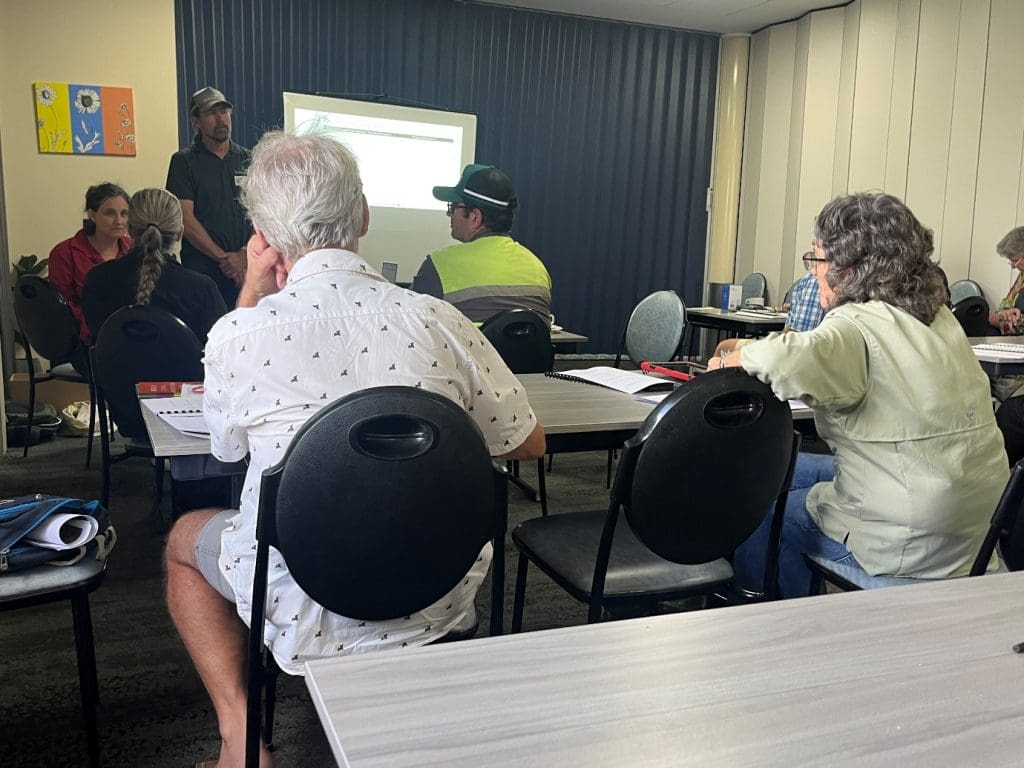
The workshop explored a range of practical topics, including pasture diversity, grazing management, production constraints, climate outlooks and digital agriculture tools. Producers also worked through hands-on mapping exercises using their own properties to identify productivity zones, landscape constraints and management opportunities.
For primary producers, one of the biggest takeaways was the importance of understanding how soils, landscape, water and climate interact to influence productivity. Sessions demonstrated how small, informed management decisions can lead to measurable improvements in land condition and farm performance over time.
The event also highlighted growing interest in digital and precision agriculture technologies as tools to complement on-ground management and improve decision making.
Importantly, the workshop provided valuable networking opportunities, bringing together producers from a range of agricultural sectors to share experiences and learn from one another.
For the TNQ Drought Hub, events like these provide an important opportunity to strengthen relationships with local producers and identify opportunities for future collaboration. By continuing these conversations through follow-up farm visits and regional activities, the Hub can help connect producers with practical soil management knowledge and emerging innovations that support productive, sustainable farming businesses into the future.