


Healthy soils, productive pastures and informed land management decisions were at the centre of the 2026 Grazing Forum and Field Day, held in Sarina and Mount Charlton on 16–17 September.
Organised by Reef Catchments, the two-day event brought together graziers, landholders, agricultural specialists and natural resource management organisations to explore practical ways to improve grazing productivity, profitability and land condition.
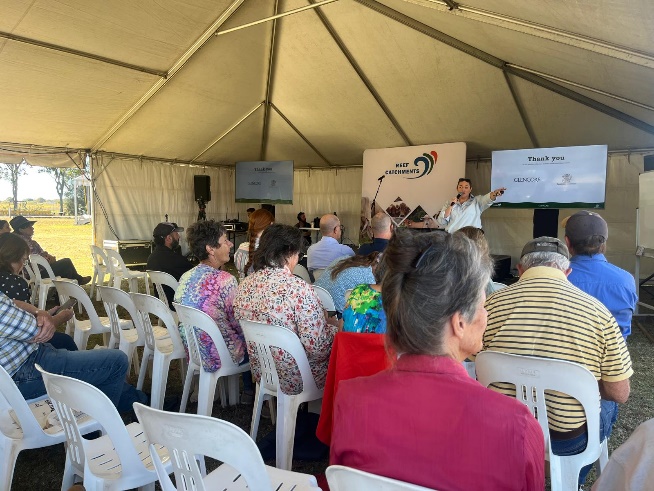
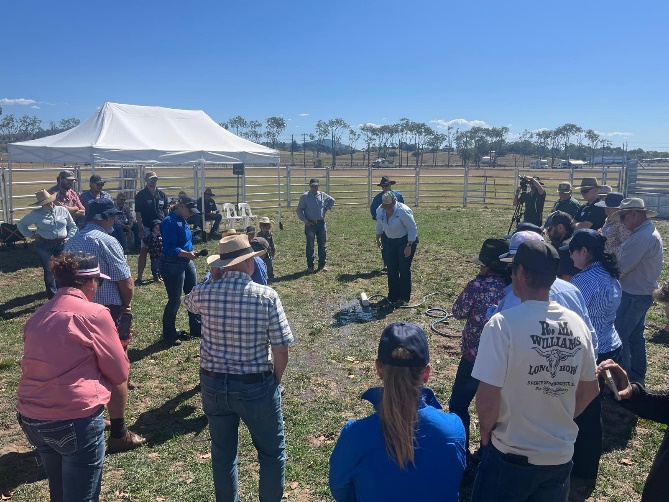
The forum at Sarina Showgrounds featured presentations on improved pasture management, natural capital awareness, soil health, landscape function, climate preparedness and innovative technologies. The following day, an on-ground field day at a private property in Mount Charlton gave participants the opportunity to discuss land condition, pasture growth and soil characteristics in a real-world setting.
Chanelle Barrett, the hub’s Drought Resilience Coordinator at Reef Catchments, led the soil session at the Grazing Field Day, helping graziers look below the surface to understand the land they manage.
Her presentation, Reading the Land, explored how soil profiles form and how local geology shapes soil type and fertility. Rather than delivering a lecture, Chanelle wrapped rigorous soil, geology and landform science in a family-character narrative, turning abstract concepts like soil formation, cation exchange capacity and drainage into personalities worth remembering. Understanding these properties matters most when it’s dry. How much water a soil can capture, store and release, and how it responds to ground cover and grazing pressure, goes a long way to deciding how well a paddock holds up in the dry season.
The informal setting sparked plenty of discussion among more than 60 attendees. They ranged from producers with over 40 years’ experience to people new to grazing, along with ten Year 9 agriculture students from Calen District State College. With the landscape and soil anchored in their minds, attendees then headed into the paddock for a facilitated pasture assessment session led by Jim Fletcher of Nightcamp Agriculture.
The hub’s Regional Soil Coordinator, Dhiraj Gajera, also attended both days to connect with producers, share practical soil-health knowledge and identify opportunities for future collaboration.
The event provided valuable opportunities for Dhiraj to hear directly from graziers about their challenges, priorities and information needs. These conversations reinforced the importance of simple, affordable monitoring methods and advice tailored to individual properties, soil types and seasonal conditions.
Post-event survey feedback was strongly positive, and one attendee’s key take-home message summed it up: “Know your soil before you start anything.” More soil workshops and in-field education were among the most requested topics for future events, and that appetite for practical soil knowledge is shaping what comes next.
The event also strengthened connections between different specialists, creating opportunities for future soil-health demonstrations, producer workshops and shared learning resources.
Chanelle is now developing a Holistic Assessment of Soil Health (HASH) field guide tailored to Mackay Whitsunday Isaac grazing country. It will help producers read their soils in the paddock, monitor key indicators to understand what they’re seeing, and use that to guide management decisions, including spotting early signs of declining soil function before the next dry.
To hear about upcoming soil workshops and field days, subscribe to Reef Catchments’ Natural State newsletter or follow Reef Catchments on Facebook.
Or find out more about our Regional Soil Coordinator and the National Soil Strategy