

Key takeaways
- The workshops showed producers how understanding their greenhouse gas emissions baseline can help identify efficiencies, improve productivity and support better on-farm decision making, rather than focusing on carbon markets or compliance.
- Participants used their own farm data to generate an emissions baseline, compare results against industry benchmarks and better understand where improvements could be made.
- In partnership with Reef Catchments, the TNQ Drought Hub helped deliver the workshops, with Senior Research Officer Ana Leite de Almeida leading the sessions and providing producers with practical knowledge and tools to strengthen business resilience and preparedness.
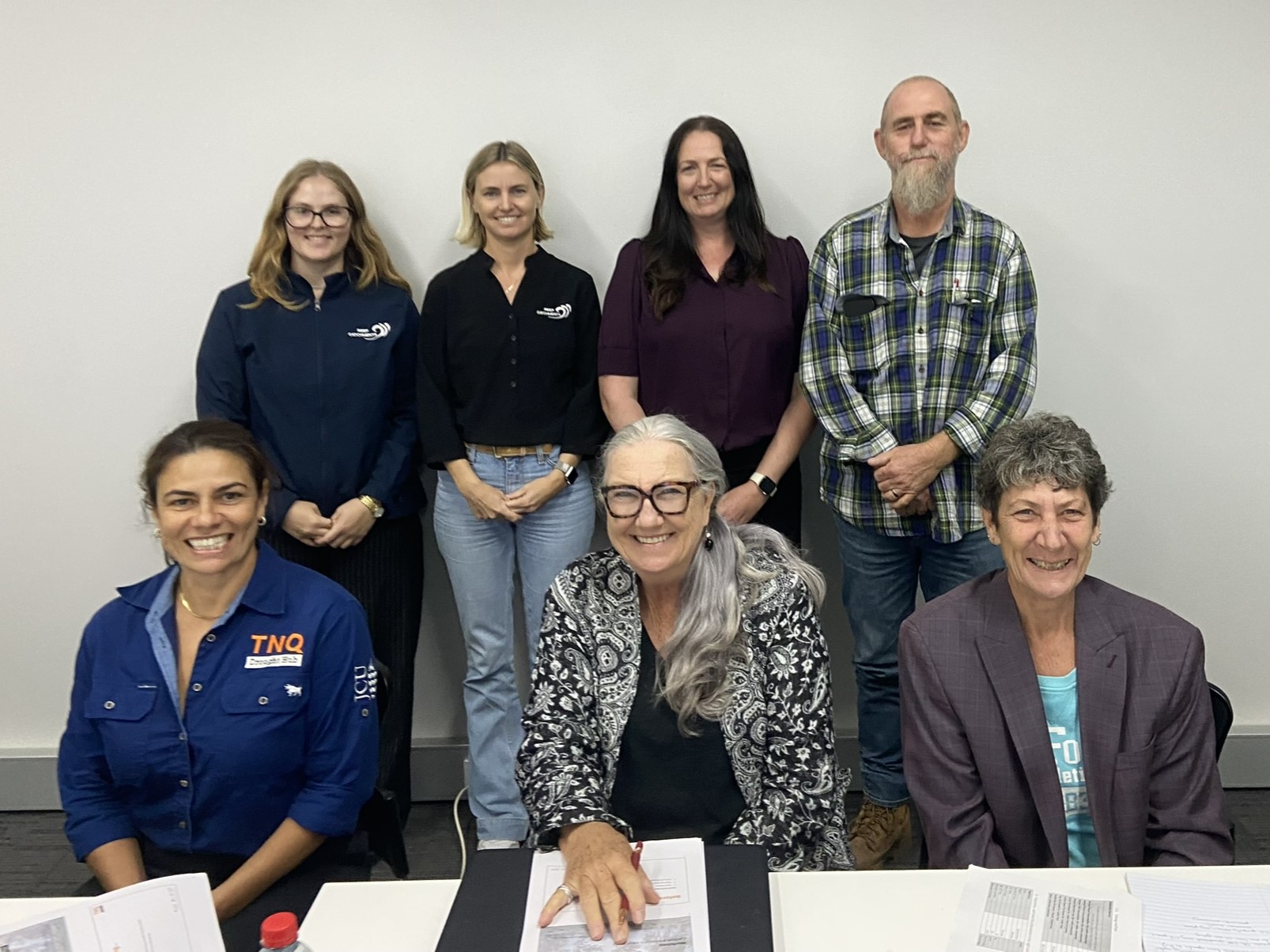
Beef producers from across the Mackay and Proserpine regions are building their understanding of carbon accounting through a series of practical emissions baselining workshops delivered by Reef Catchments in partnership with the TNQ Drought Hub.
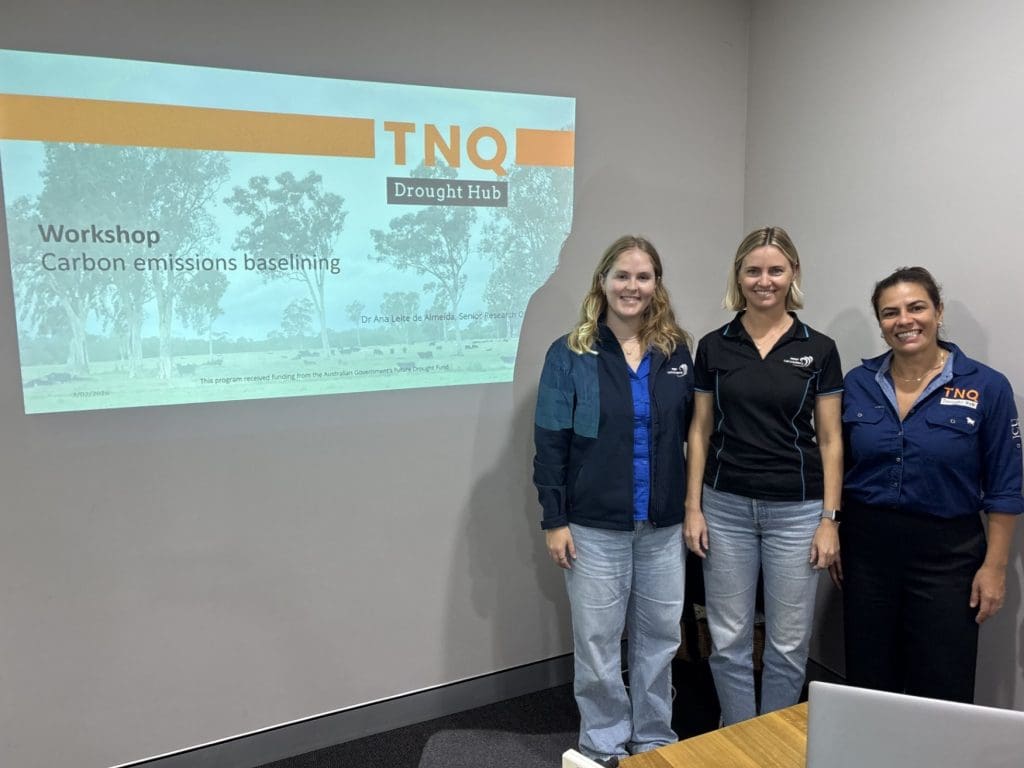
Held in Proserpine on 7 July, Mackay on 8 July, and followed by an online session, the Emissions Baseline workshops gave producers the opportunity to better understand greenhouse gas emissions within their grazing businesses and how carbon accounting can support practical farm management.
Led by the TNQ Drought Hub’s Senior Research Officer, Ana Leite de Almeida, the workshops explored Scope 1, 2 and 3 emissions and introduced participants to the Sheep and Beef Greenhouse Gas Accounting Framework (SB-GAF), a tool used to develop property emissions baselines.
Rather than focusing on carbon markets or compliance, the workshops highlighted how emissions baselining can help producers gain a clearer picture of their business and support more informed management decisions.
“Understanding your emissions baseline is about understanding your business,” Ana said.
“It’s a practical tool that helps identify where emissions are coming from, where efficiencies can be improved and where opportunities exist to increase carbon sequestration. It gives producers another layer of information to support decision making.”
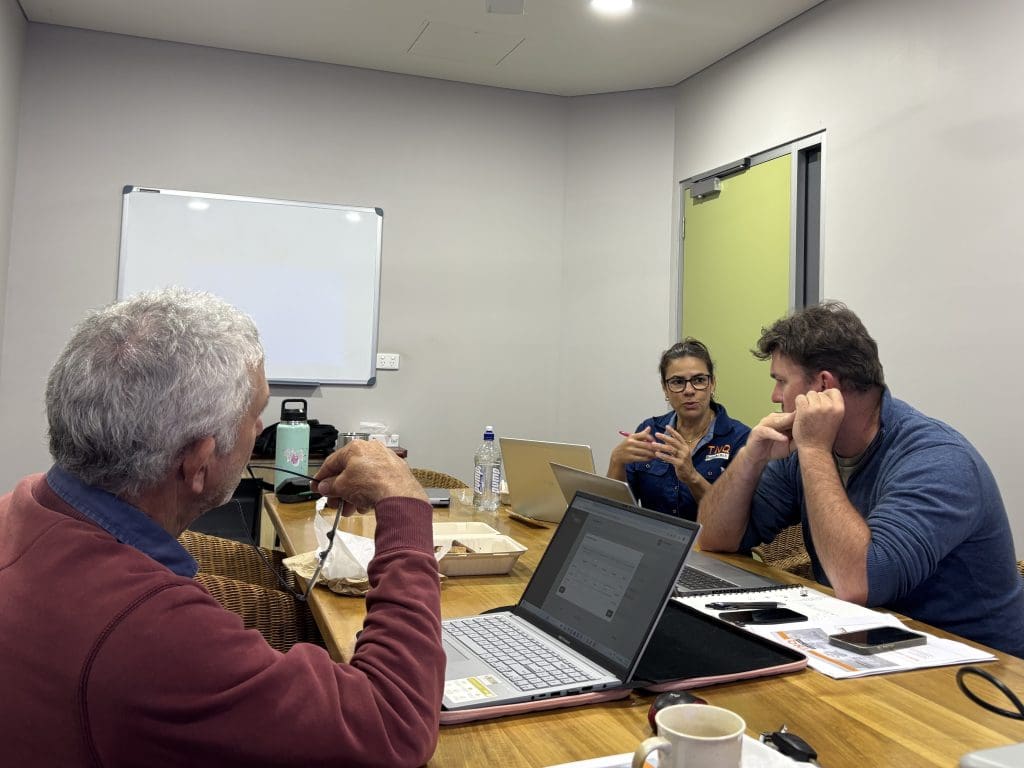
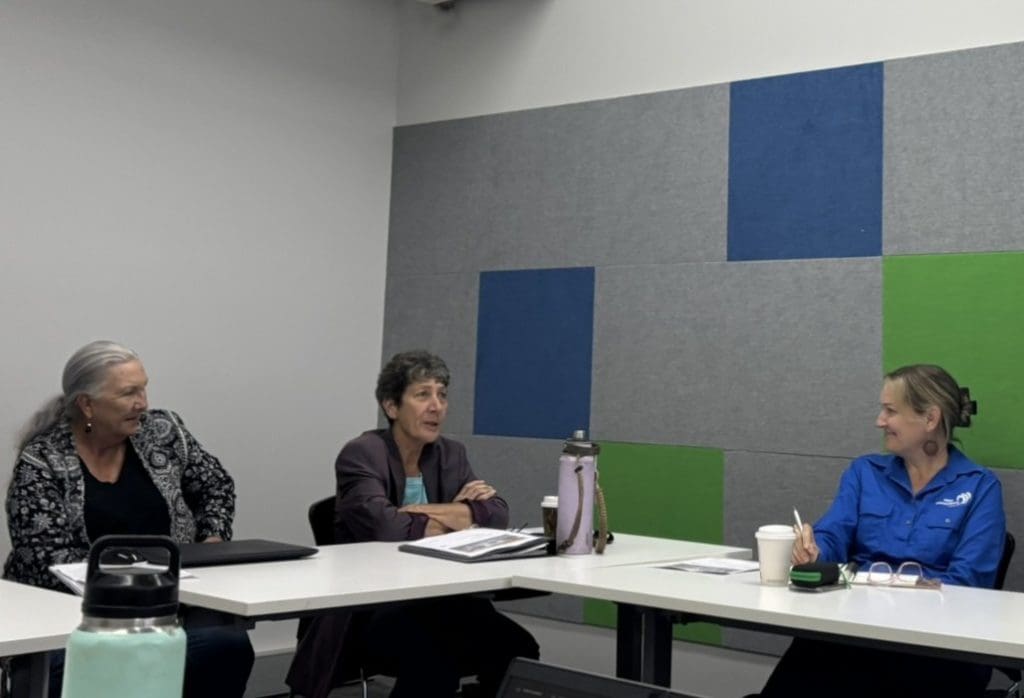
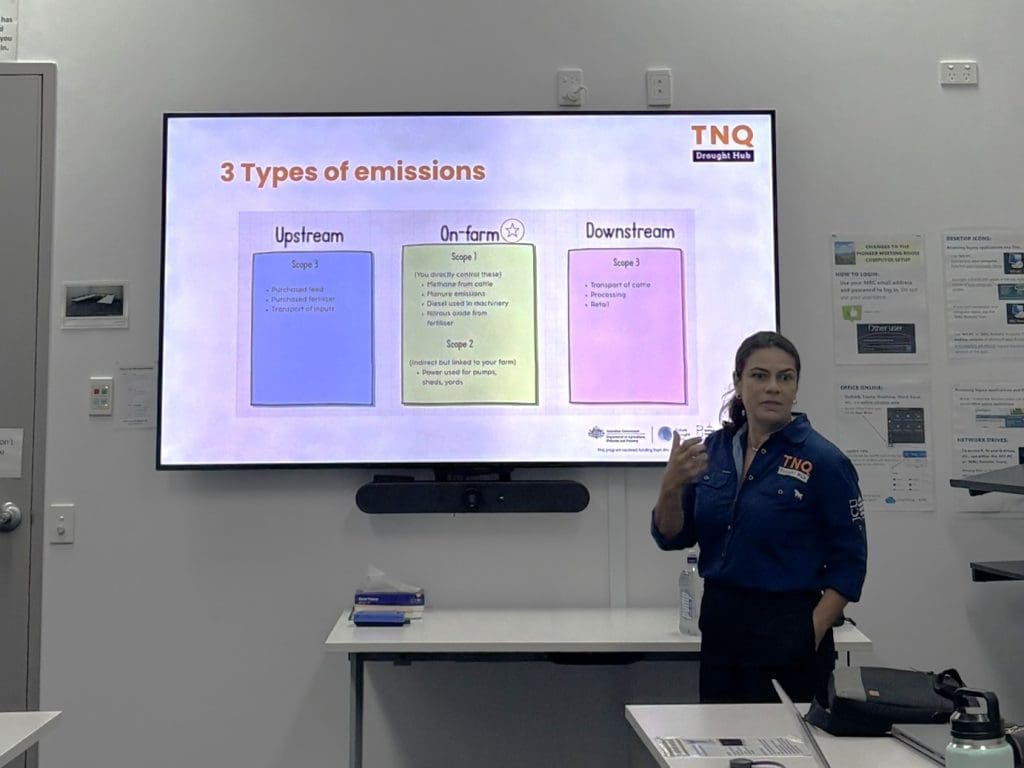
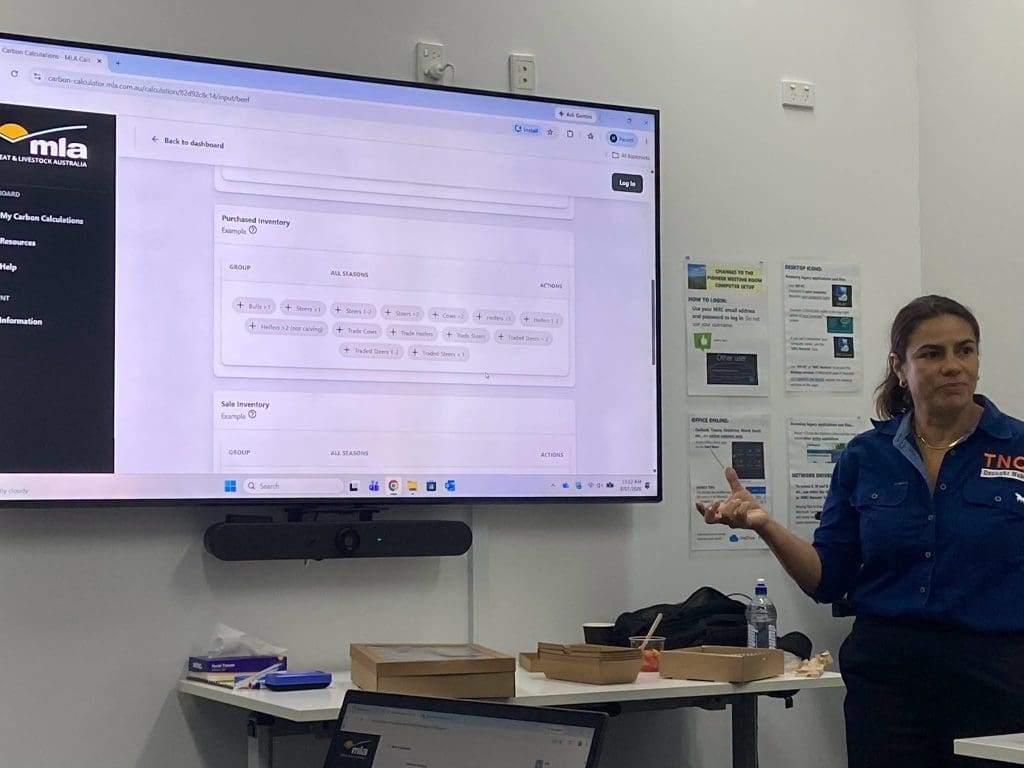
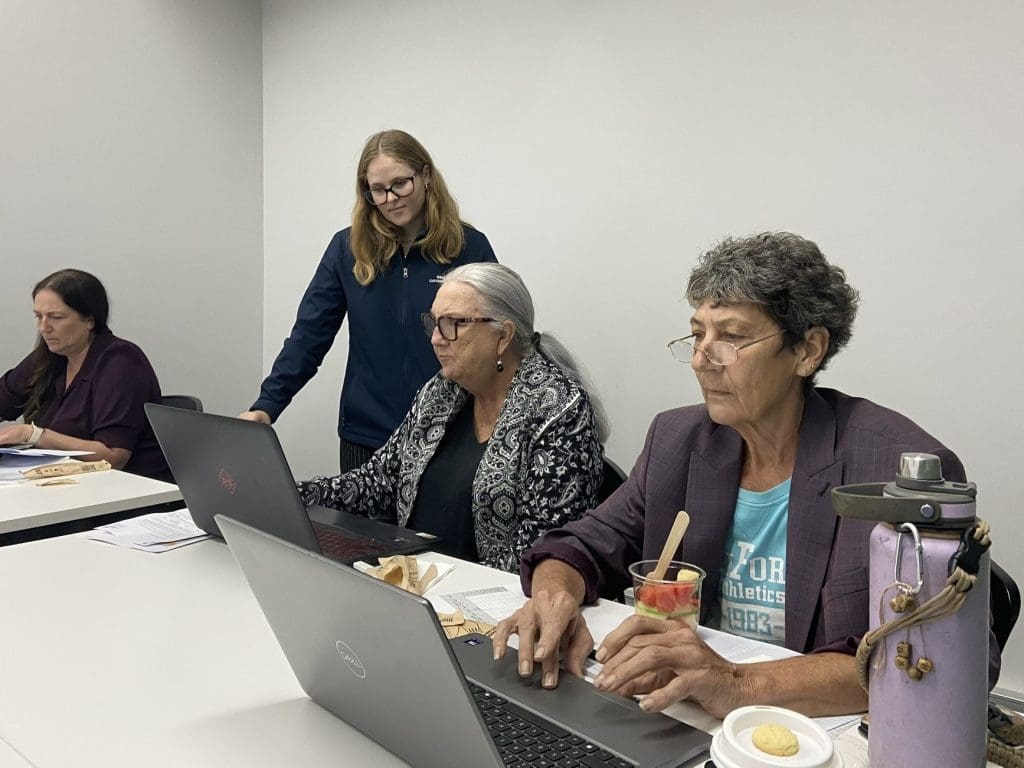
A key part of the workshops was a hands-on demonstration of an online carbon accounting platform. Producers entered data from their own properties to generate an emissions baseline before working through the results with the project team.
Comparing individual results against industry benchmarks helped participants better understand emissions intensity and how productivity improvements can also improve emissions efficiency.
The workshops reinforced that strong business performance and carbon management often go hand in hand, with discussions focusing on herd performance, management practices and opportunities to improve whole-of-farm efficiency.
The online session also demonstrated the value of repeating emissions baselines over time. One producer, who had previously completed a baseline through Rabobank, found the second assessment straightforward and highlighted the importance of maintaining accurate farm records to track progress and generate reliable results.
Ana said the workshops also created valuable opportunities for producers to learn from each other and ask questions in a supportive environment.
“It was great to see local landholders come together and share their experiences,” she said.
“Having a clearer understanding of your property is another step towards making informed decisions, improving efficiency and being prepared for whatever the future brings.”
The workshops also strengthened Reef Catchments’ capacity to support producers with carbon accounting and its role in whole-farm business management, helping ensure local producers can continue accessing practical advice and support into the future.