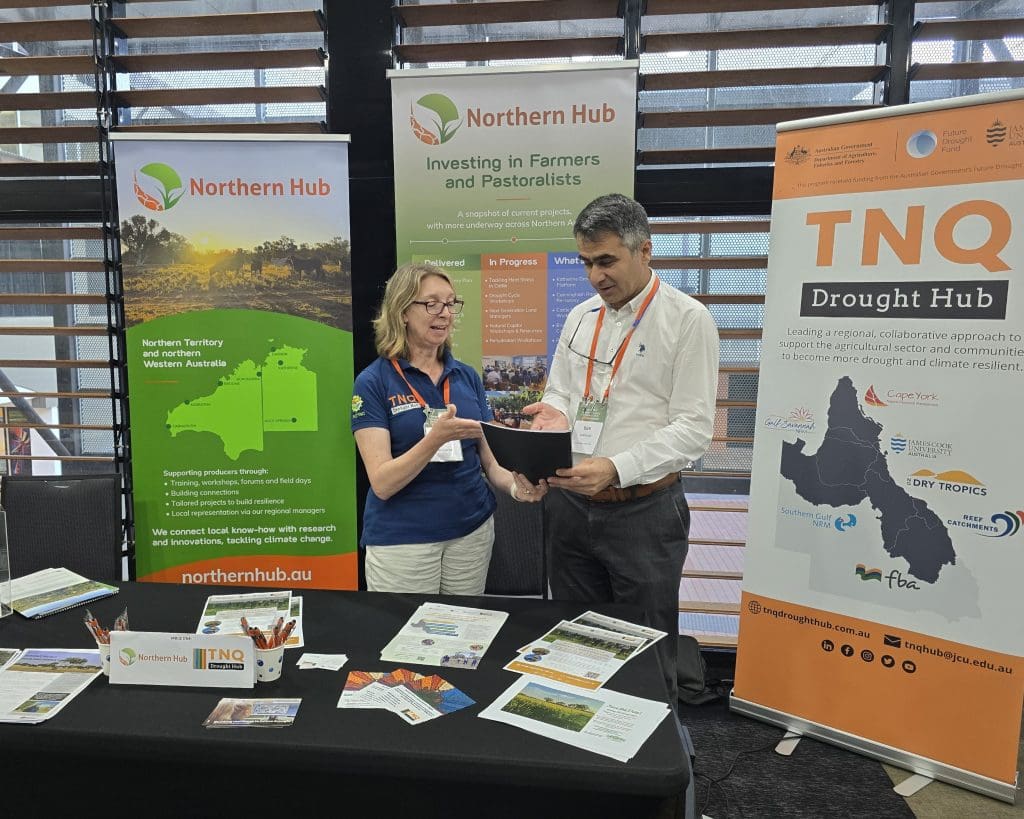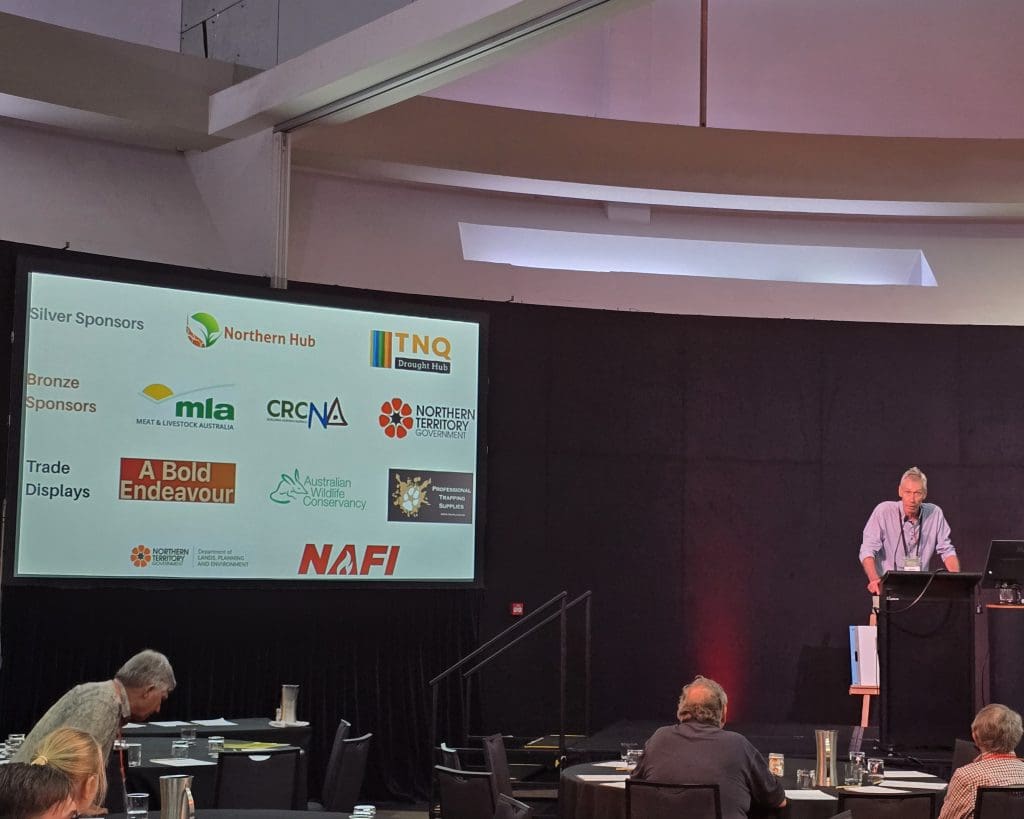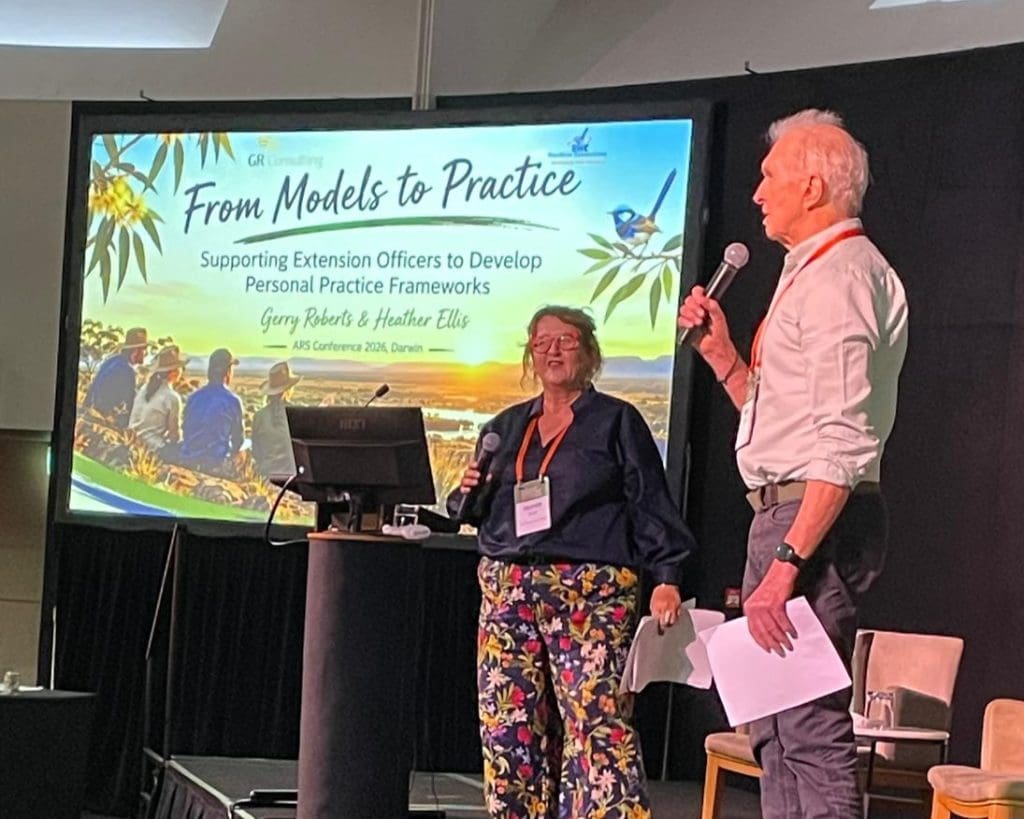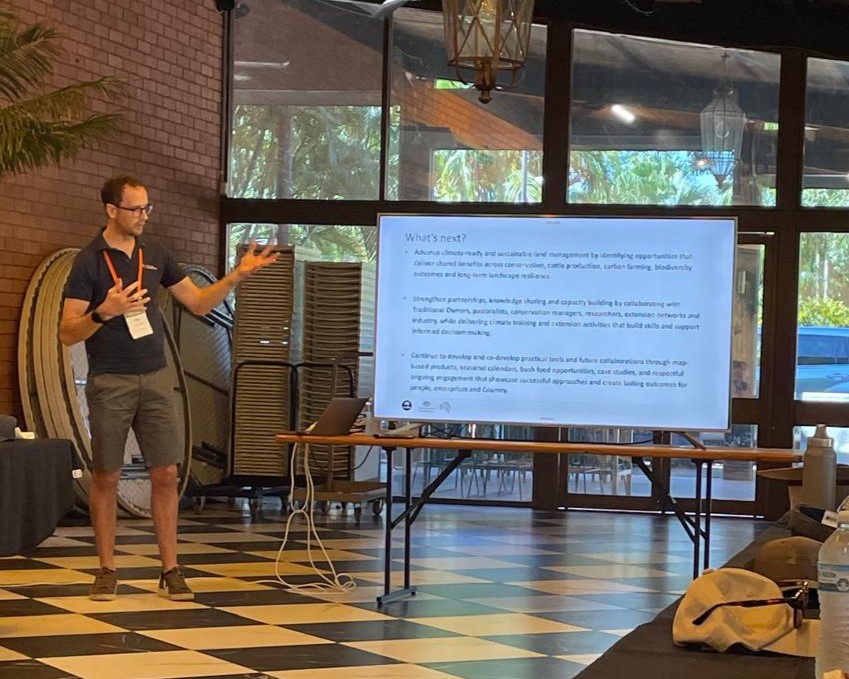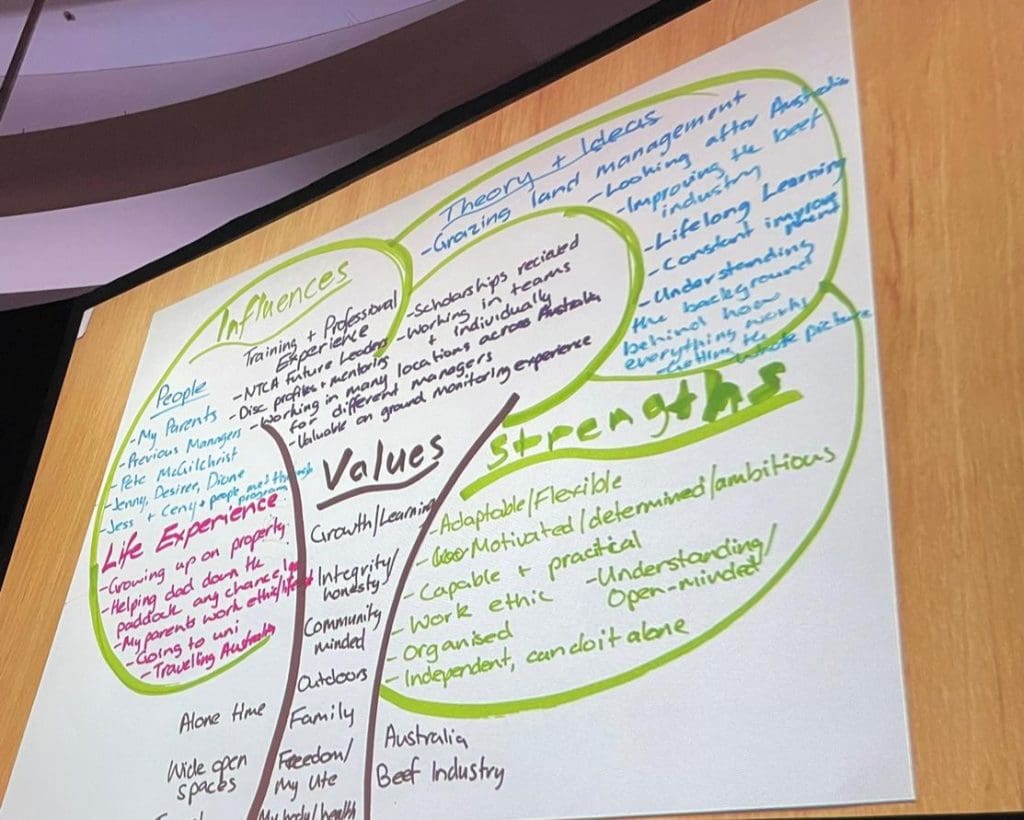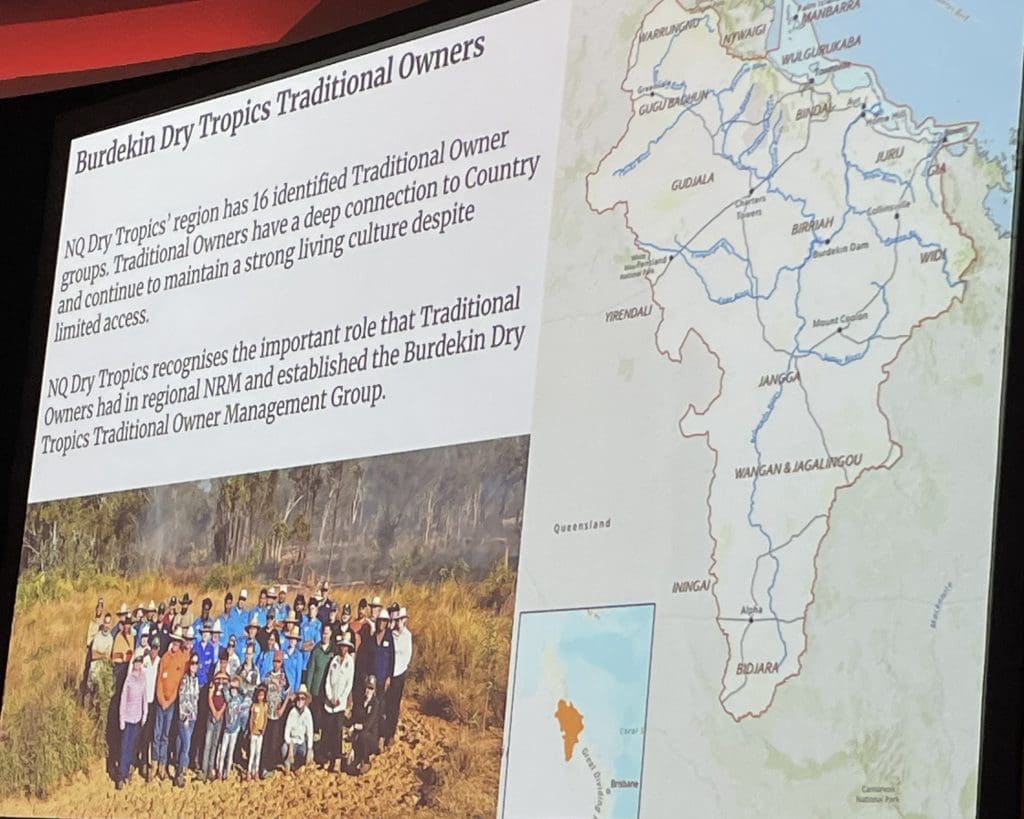


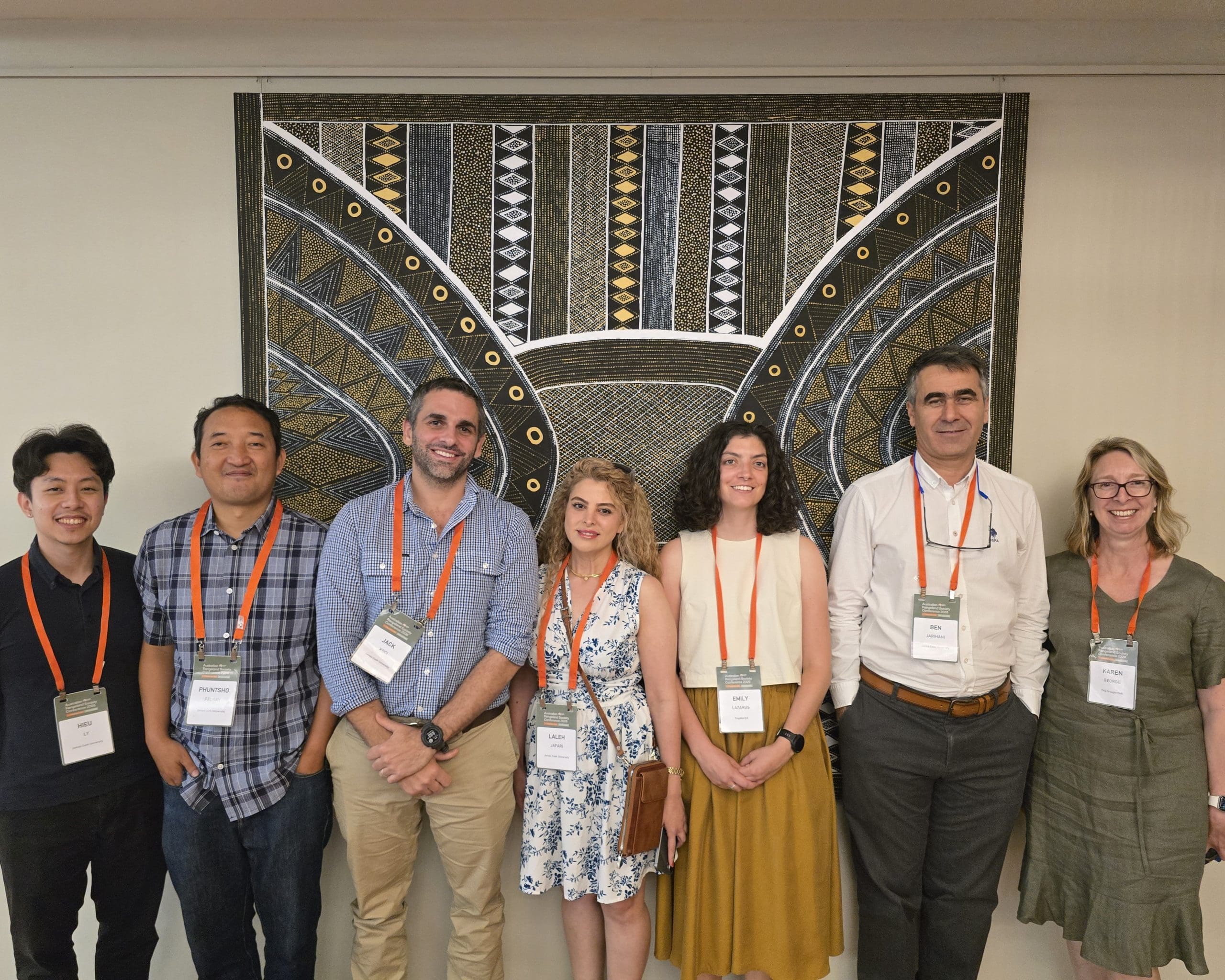
In early September, the TNQ Drought Hub partnered with the Northern Hub to support and attend the 2026 Australian Rangeland Society Conference in Darwin, bringing together researchers, Traditional Owners, pastoralists, land managers and policymakers to share knowledge and explore challenges facing Australia’s rangelands.
With around 220 delegates attending the five-day conference, this year’s theme was Managing Country for Cattle, Culture, Conservation and Carbon.
Research presented covered topics relevant to northern Queensland producers, including grazing land condition, pasture productivity, climate resilience, biodiversity and sustainable beef production.
Connecting research with on-ground challenges
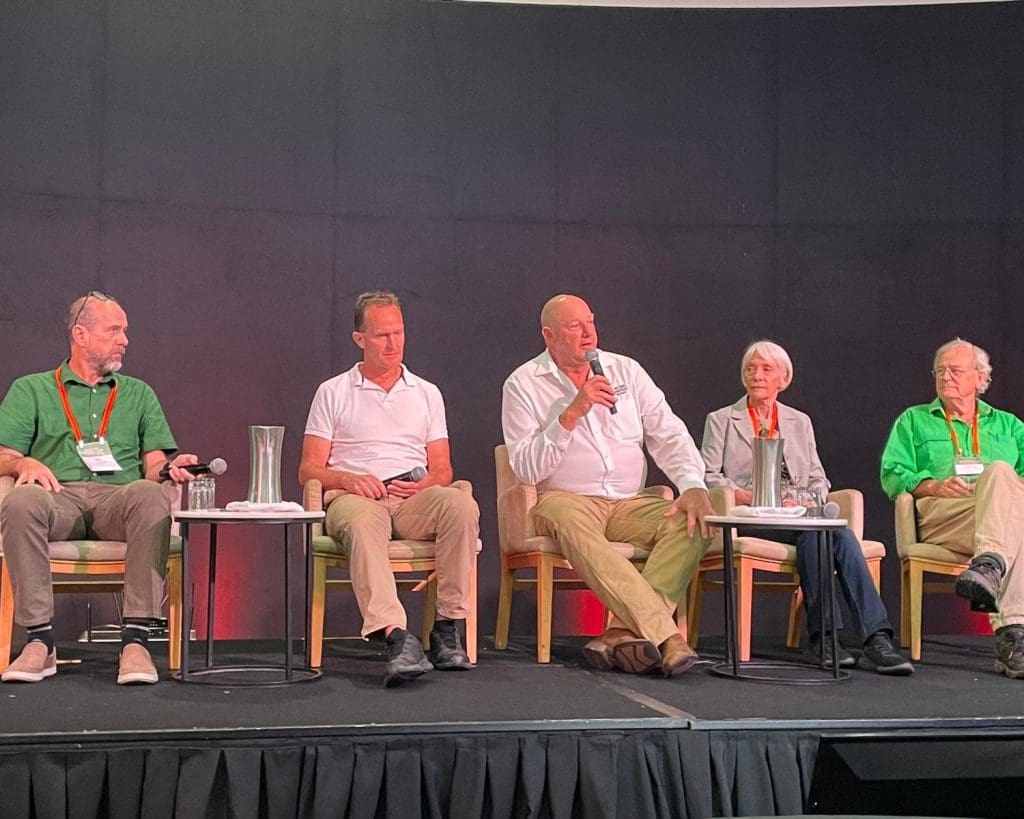
Carbon was a key theme throughout the conference, with discussions highlighting the importance of building a clearer understanding of natural capital, including the language and concepts used to describe it.
Presentations and discussions also highlighted the important role of Indigenous knowledge and stewardship across Indigenous Protected Areas, alongside concerns about investment levels and current challenges within carbon and biodiversity markets.
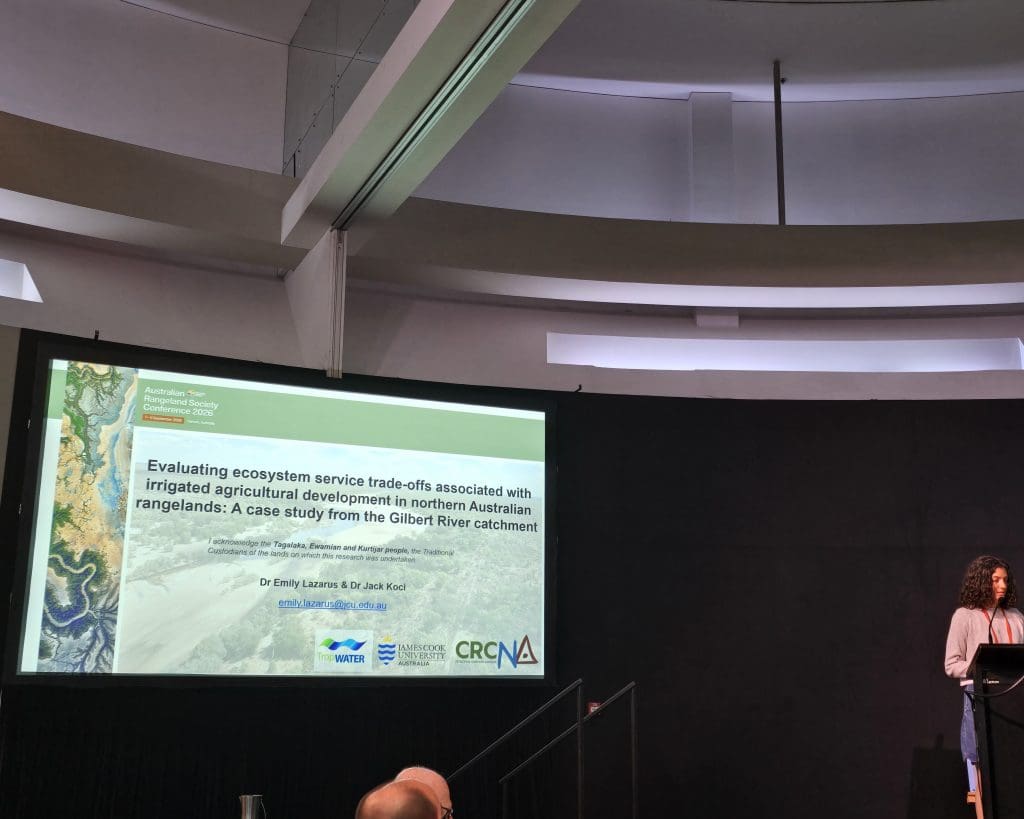
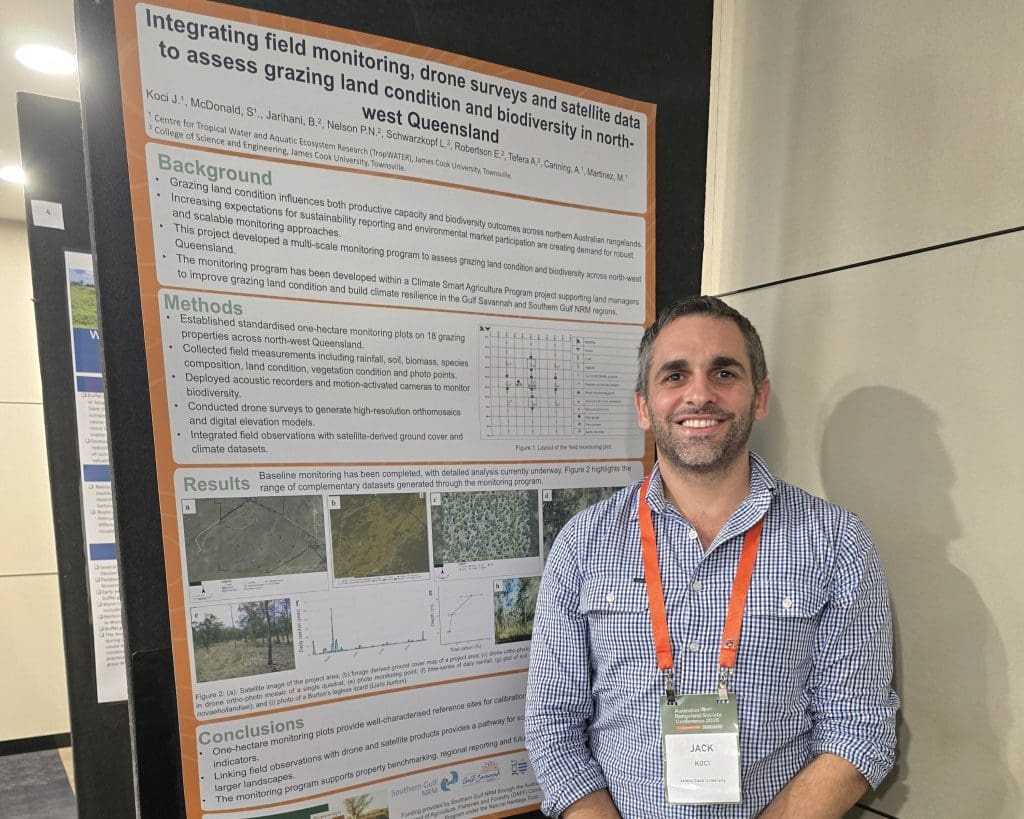
The hub and James Cook University (JCU) were represented by TNQ Drought Hub Director Karen George, hub project supporters Dr Ben Jarihani from JCU’s College of Science and Engineering and Dr Jack Koci from JCU’s TropWATER, alongside JCU PhD students Hieu Ly, Laleh Jafari and Phuntsho Pelgay and TropWATER’s Dr Emily Lazarus.
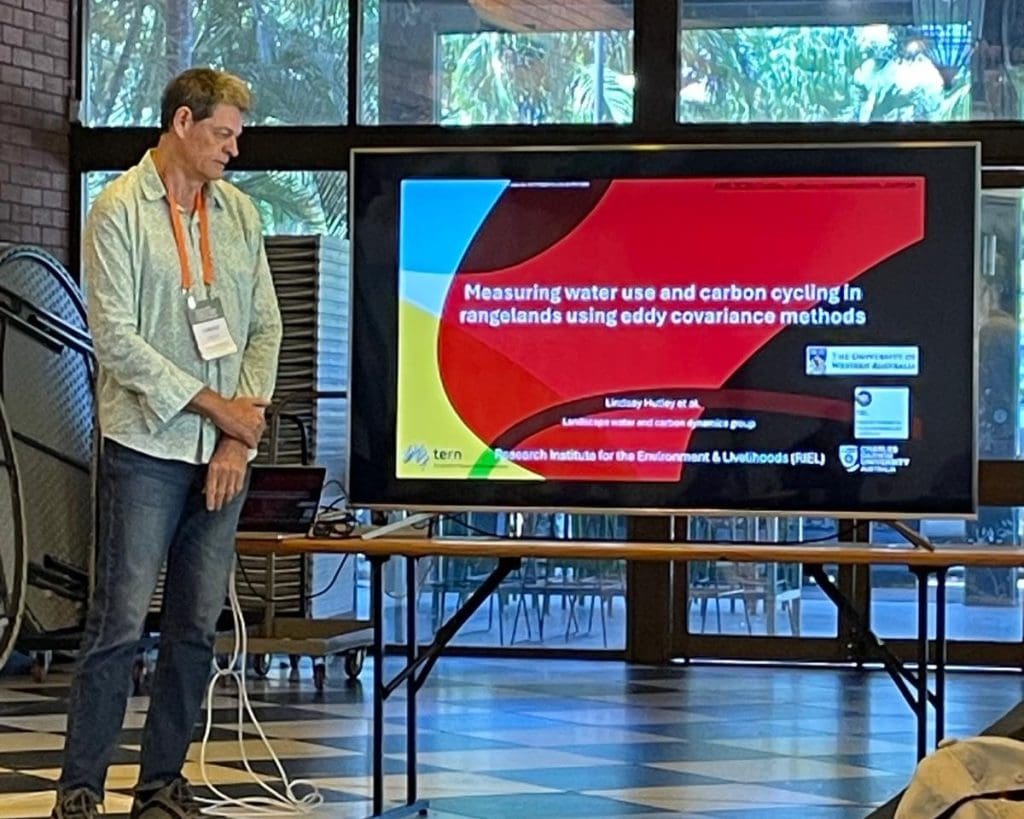
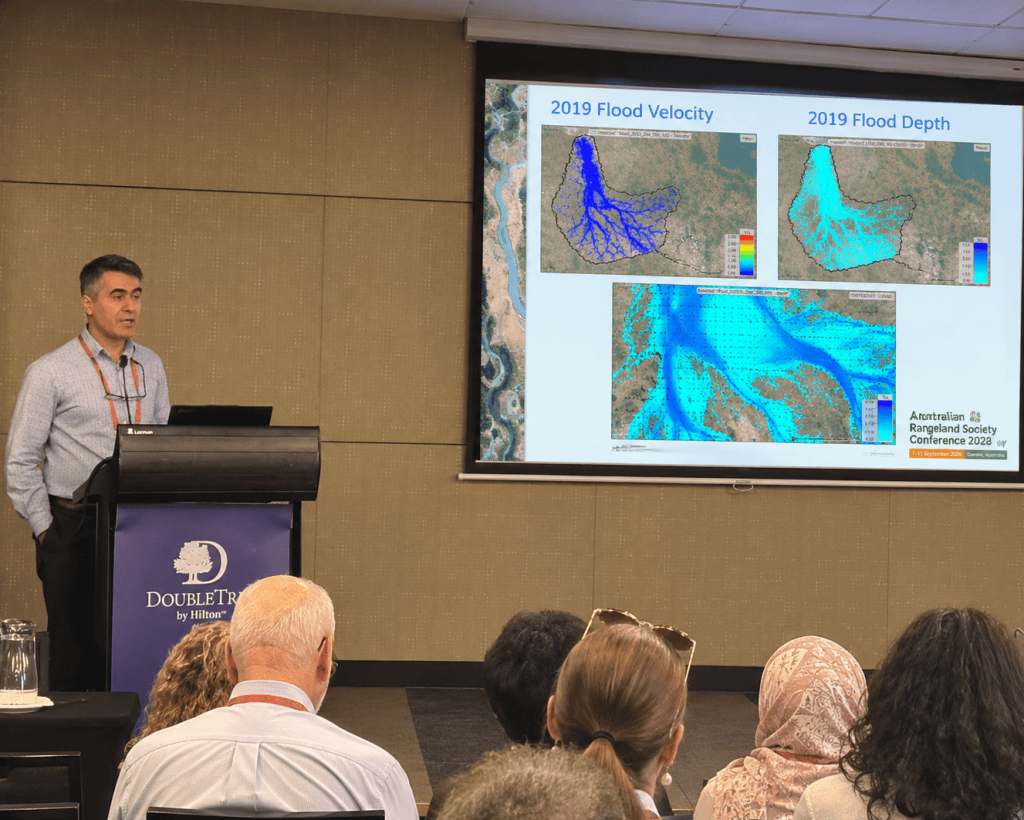
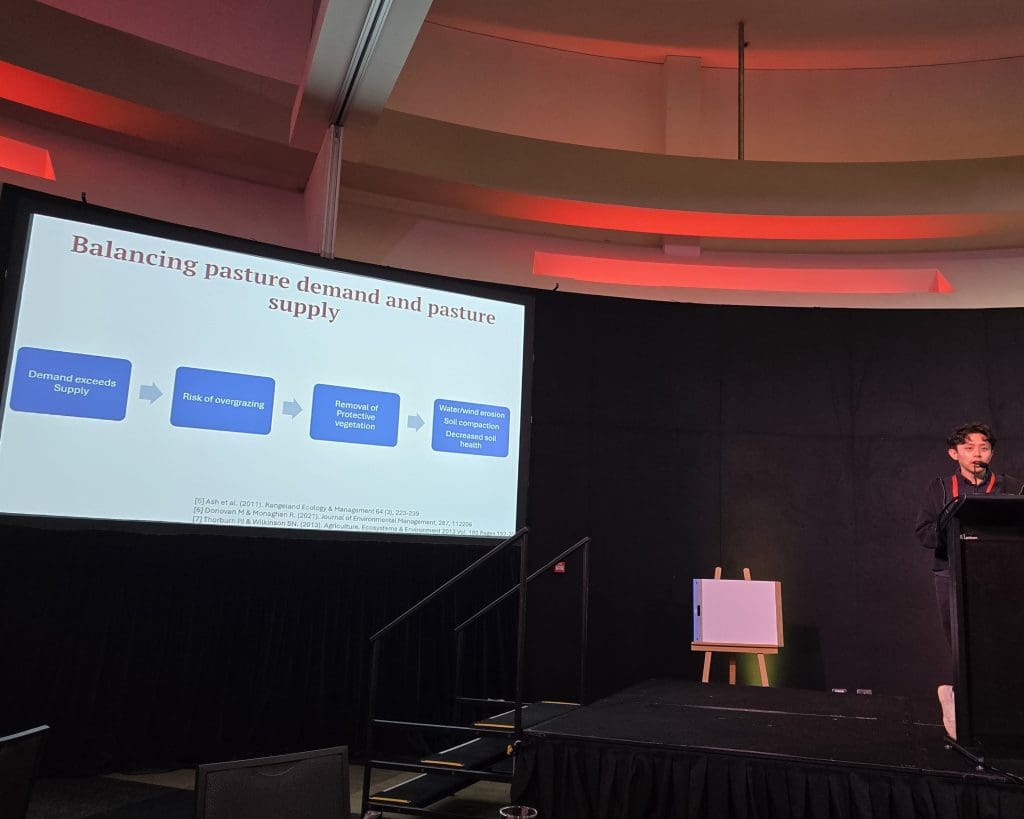
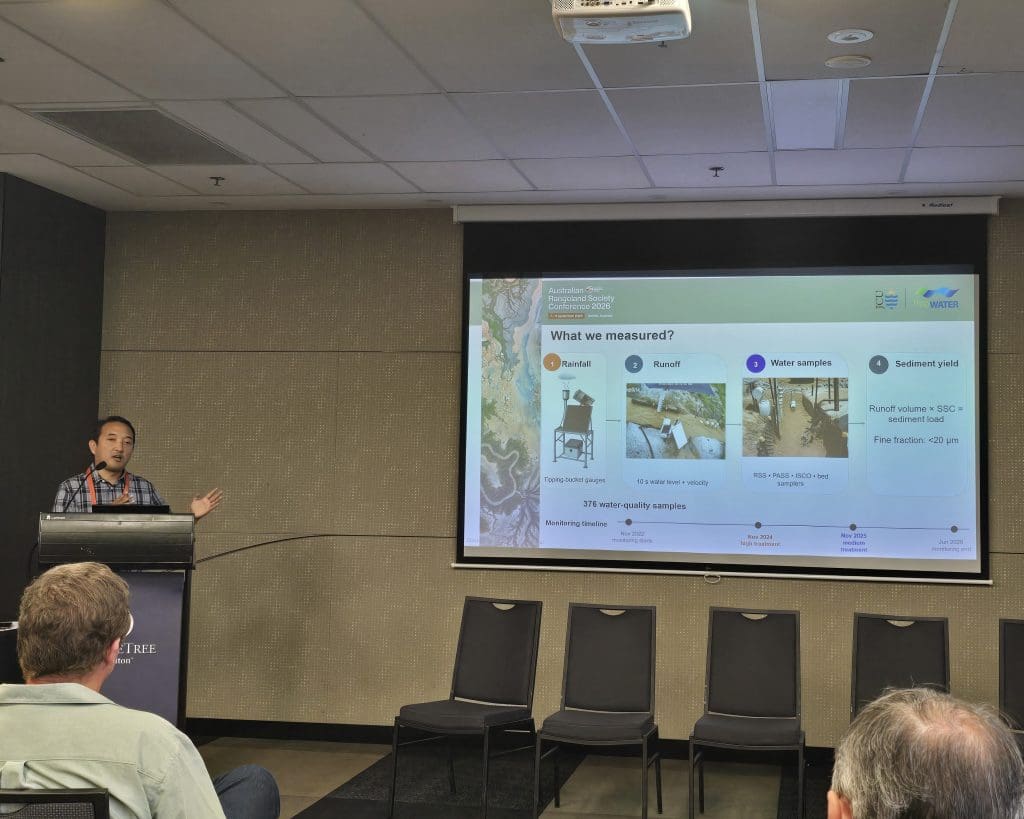
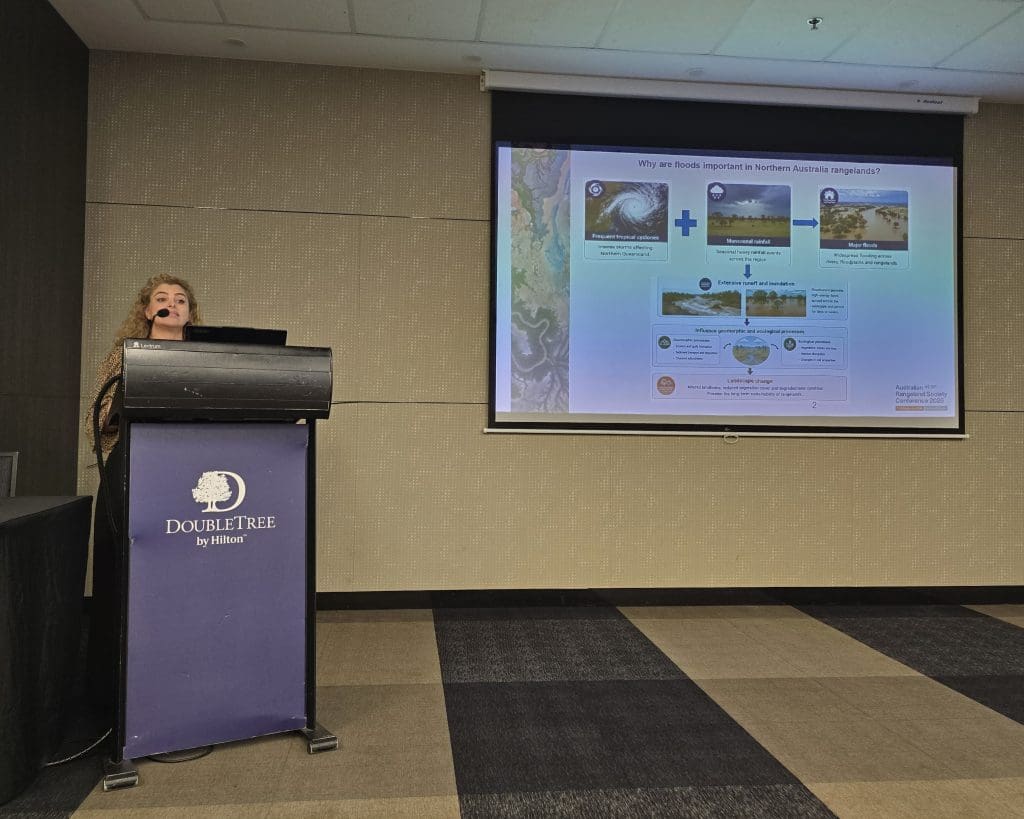
JCU researchers and students shared their work on rainfall and pasture growth dynamics, alluvial gully remediation, and monitoring flood impacts in the Flinders River Catchment. Dr Ben Jarihani also delivered a three-minute presentation on satellite remote sensing and hydrodynamic modelling for monitoring large flood events.
Strengthening connections across the north
The conference provided an opportunity to connect with current hub Node partners, agricultural stakeholders, producers and graziers from across northern Australia and share knowledge and explore opportunities for collaboration.
As planning progresses for the next round of Drought Resilience Adoption and Innovation Hubs, maintaining these relationships and connections across the region will be important to help ensure organisations continue working together, regardless of future funding arrangements.
For the TNQ Drought Hub, the conference reinforced the value of connecting people, research and industry to support practical outcomes for northern Queensland agriculture.