
James Cook University Australia

ESG on Farm: Are you ready?

The TNQ Hub is developing educational materials to help support Australian producers, farmers and land managers understand the Environmental, Social and Governance (ESG) framework and integrate an analysis into their farming business, aiming to enhance sustainability performance and facilitate a transition to a more sustainable food production system.

What is ESG?

ESG is a framework that can help producers to address sustainability issues, enhance sustainability performance, increase resilience, reduce risks and create opportunities. ESG stands for:

  • Environmental

    These are factors related to the way you manage renewable and non-renewable resources such as water, soil, biodiversity, minerals, and animal treatment.

  • Social

    These are factors related to the way you interact with your family, employees, communities, consumers, supply chain and business relationships.

  • Governance

    These are factors related to your business such as leadership, management, systems, processes, products and controls.

Why ESG?

Environmental, Social, and Governance (ESG) is no longer a niche concept. ESG standards are now essential for promoting sustainability in agriculture and creating long-term value in agricultural production.

An ESG assessment offers valuable insights into on-farm risks and opportunities, enabling farmers to become leaders in sustainable practices and distinguish themselves as champions of sustainability.

What is ESG?

What is an ESG Analysis?

ESG Toolkit for Sugar Cane Growers

ESG Priority Survey

Help ensure ESG activities reflect real grower priorities and support practical actions that strengthen performance, resilience and access to emerging markets.

A new ESG materiality assessment is underway to update and expand our understanding of the key sustainability issues shaping sugarcane production in Queensland. 

The 2023 to 2024 assessment in the Burdekin and Mackay regions showed environmental issues were the top concern. These insights will guide the future of the hub’s ESG work for Queensland’s sugarcane industry.

"ESG on Farm: Are you Ready?" A workbook for farmers

We have also created a comprehensive workbook to help you learn about ESG and guide you through developing your own detailed ESG analysis.

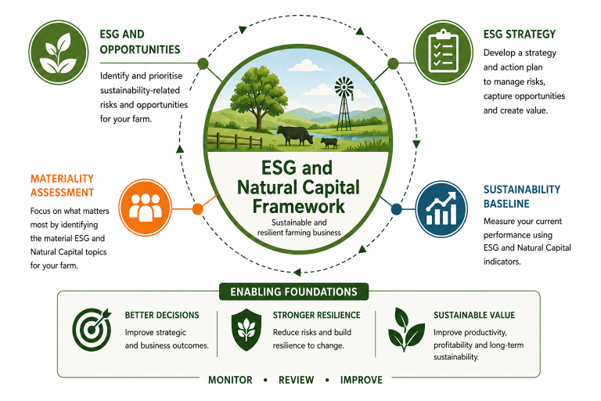
The “ESG on Farm: Are you Ready?” workbook provides a practical guide to support farmers/primary producers develop their own ESG analysis.

  • Section 1 of the workbook: About ESG and the ESG framework
  • Section 2 of the workbook: How to do an ESG analysis using the framework

This framework will help you establish a sustainability baseline, measure ESG factors, create an ESG strategy and report on sustainability-related risks and opportunities. It also links to the wider international environmental and social goals under the United Nations Sustainable Development Goals.

ESG Toolkit for Beef Producers

An ESG On-Farm Workbook is currently being adapted to suit beef producers and their operations. For more information, contact TNQ Drought Hub Senior Research Officer Ana Leite De Almeida ana.leitedealmeida@jcu.edu.au or 0402 693 448.

Disclaimer: All the content was built upon existing international and national guidelines, frameworks, and recommendations (e.g., the Global Reporting Initiative (GRI), the Sustainability Accounting Standards Board (SASB), the Task Force on Climate-Related Financial Disclosures (TCFD), the Sustainable Development Goals (SDGs) and the Australian Agricultural Sustainability Framework (AASF). Our effort consisted of adapting those guidelines to make them more “on farm” and easier to be applied by primary producers in Australia.

Contact

If you have any questions about ESG or would like help completing your ESG Assessment, please complete the form below or contact TNQ Drought Hub Senior Research Officer and sustainability advocate, Ana Leite De Almeida directly – ana.leitedealmeida@jcu.edu.au or 0402 693 448.

ESG in Action

ESG and Sustainability goes from the classroom to the coastline

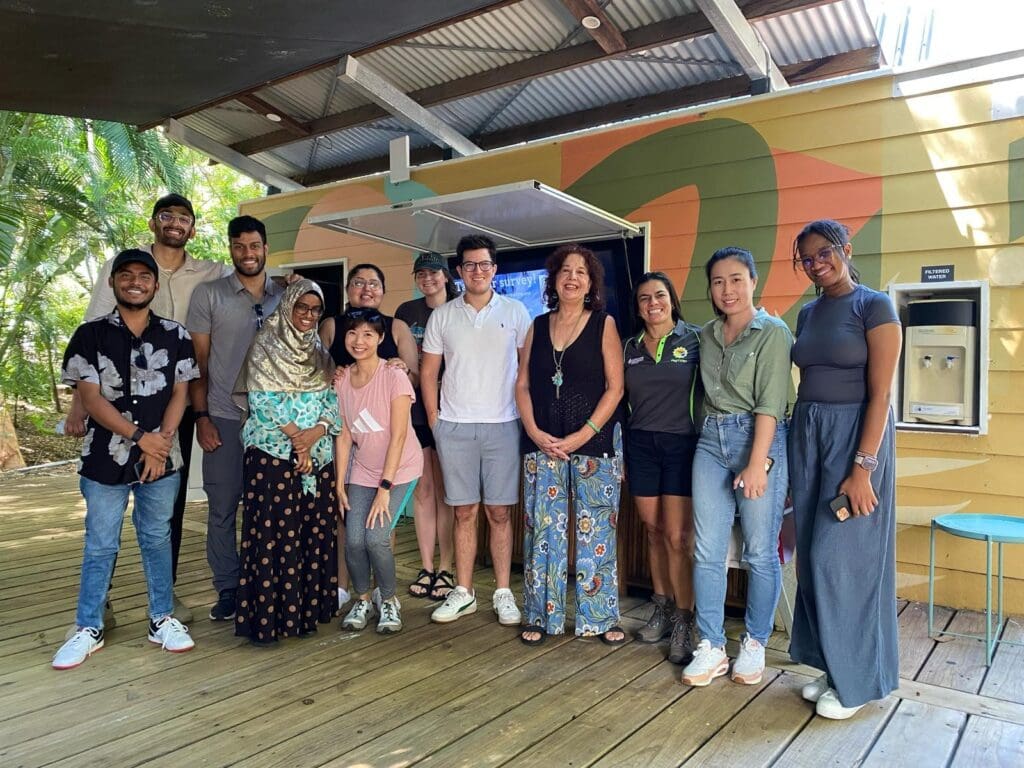
ESG and Sustainability goes from the classroom to the coastline Key takeaways Students had the opportunity to see ESG and sustainability in action at Magnetic Island It gave them firsthand insight into how sustainability theory translates into practical application The TNQ Drought Hub Senior Research Officer Dr Ana Leite de Almeida was invited to be a guest lecturer and lead the student tour  On April 10th, a group of James Cook  University (JCU) students swapped the classroom for the coastline, heading over to Magnetic Island for a hands-on look at ESG and sustainability in action. The day trip, led

Read More »

Driving Drought Resilience Through ESG: An On Farm Focus

Driving Drought Resilience Through ESG: An On Farm Focus Key takeaways TNQ Drought Hub is developing educational materials to help support Australian producers, farmers and land managers understand Environmental, Social and Governance (ESG) practices. The Rapid ESG Assessment tool is designed to help small business farmers quickly adopt ESG standards and enhance their sustainable farming practices ESG can help producers to address sustainability issues, enhance sustainability performance, increase resilience, reduce risks and create opportunities The TNQ Drought Hub is leading the way in helping farmers incorporate Environmental, Social, and Governance (ESG) practices into their operations. Recognising the role of ESG in

Read More »

ESG One-on-one, 20-21 May, Mackay

ESG One-on-one, 20-21 May, Mackay ESG expert and hub Senior Research Officer, Ana Leite De Almeida and Reef Catchments Drought Resilience Coordinator, Carlos Bueno have been out visiting several sugarcane farmers who attended the ‘ESG on Farm’ workshop in Mackay in December last year. The purpose of the visit was to meet and go through a new one-on-one activity with those farmers who are interested in completing an ESG analyse, and to better understanding what would be the easiest and most effective way for farmers to adopt the ESG on Farm framework. Ana and Carlos worked with the farmers

Read More »