


Two Indigenous James Cook University students had the opportunity to connect with Indigenous knowledge holders, researchers and practitioners from around the world through support from the TNQ Drought Hubs Sustainable Aboriginal and Torres Strait Islander Enterprise (SATSIE) Program.
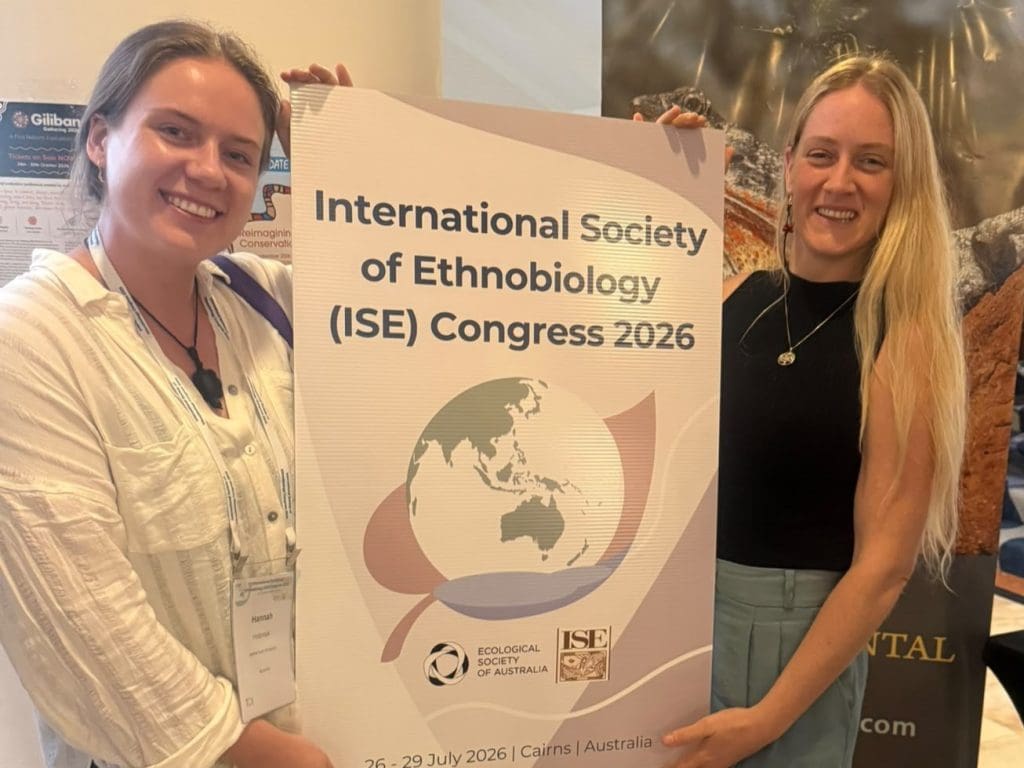
Tara Ganley and Hannah Holbrook attended the 19th International Society of Ethnobiology (ISE) Congress in Cairns, with hub support also enabling them to participate in associated activities, including a Cultural Burn Field Trip.
Held in Australia for the first time, the Congress brought together Indigenous Elders and Custodians, ethnobotanists, scientists, academics and practitioners from around the world to share knowledge and explore relationships between people and the natural world. Under the theme “Indigenous and Local Knowledge Connections: Honouring Heritage and Innovation,” the Congress provided a space for different knowledge systems and world views to come together, build understanding and explore approaches to biodiversity, culture and caring for Country and responding to the challenges of climate change.
The program also explored how Indigenous knowledge can contribute to climate resilience, food security, biodiversity conservation and sustainable futures, with Indigenous ethnobotanist Gerry Turpin who chaired the congress.
For Tara, a Cairns local studying a Bachelor of Environmental Science and Management at JCU, the Congress provided an opportunity to learn from experiences extending well beyond Far North Queensland.
“Learning about ethnobiology and meeting people from all over the world was one of the most valuable parts of the ISE Conference for me. Hearing about the challenges other delegates had faced and how they had adapted was both motivating and inspiring,” Tara said.
Hannah described attending the Congress as a “profound and transformative experience.”
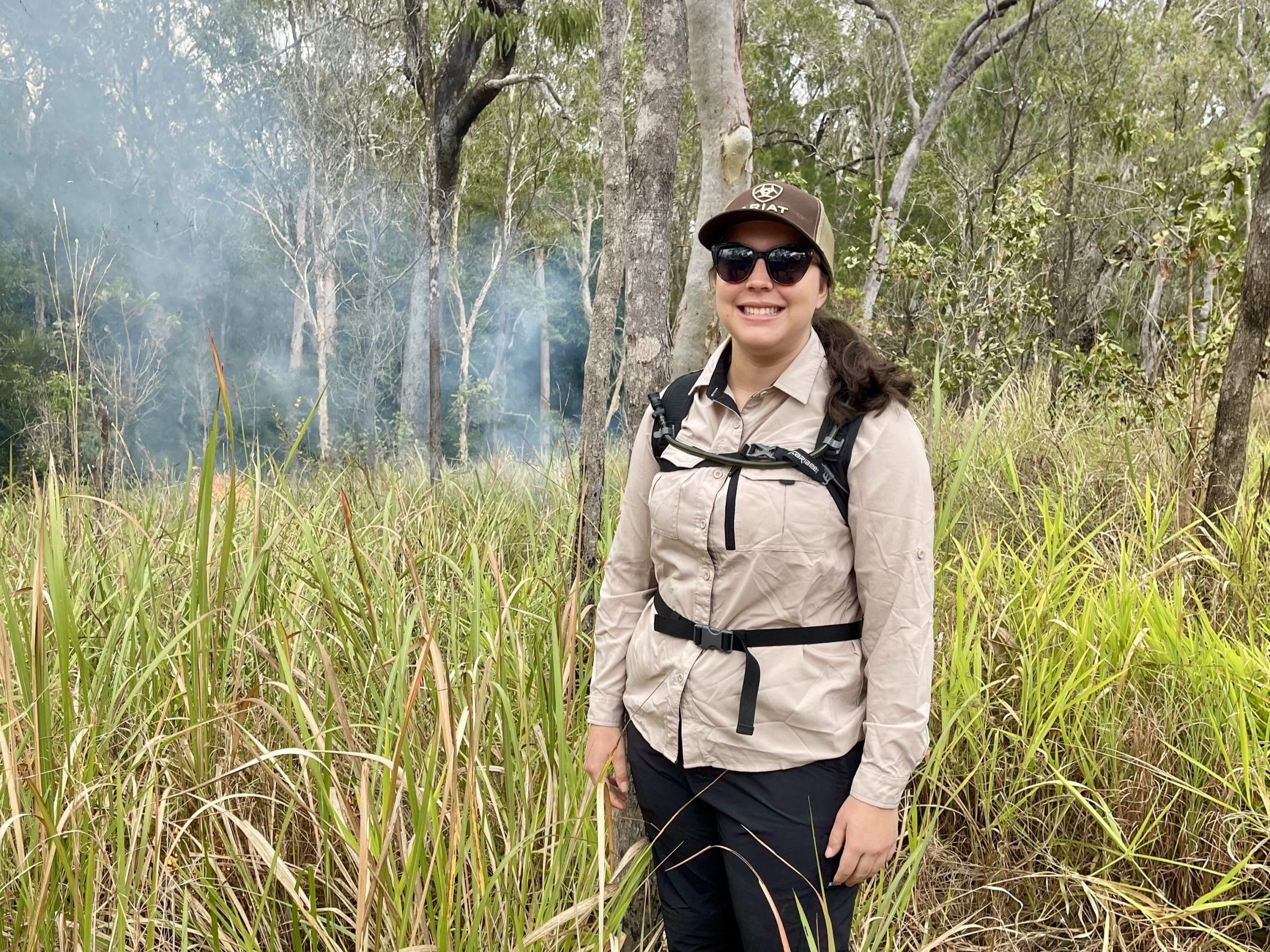
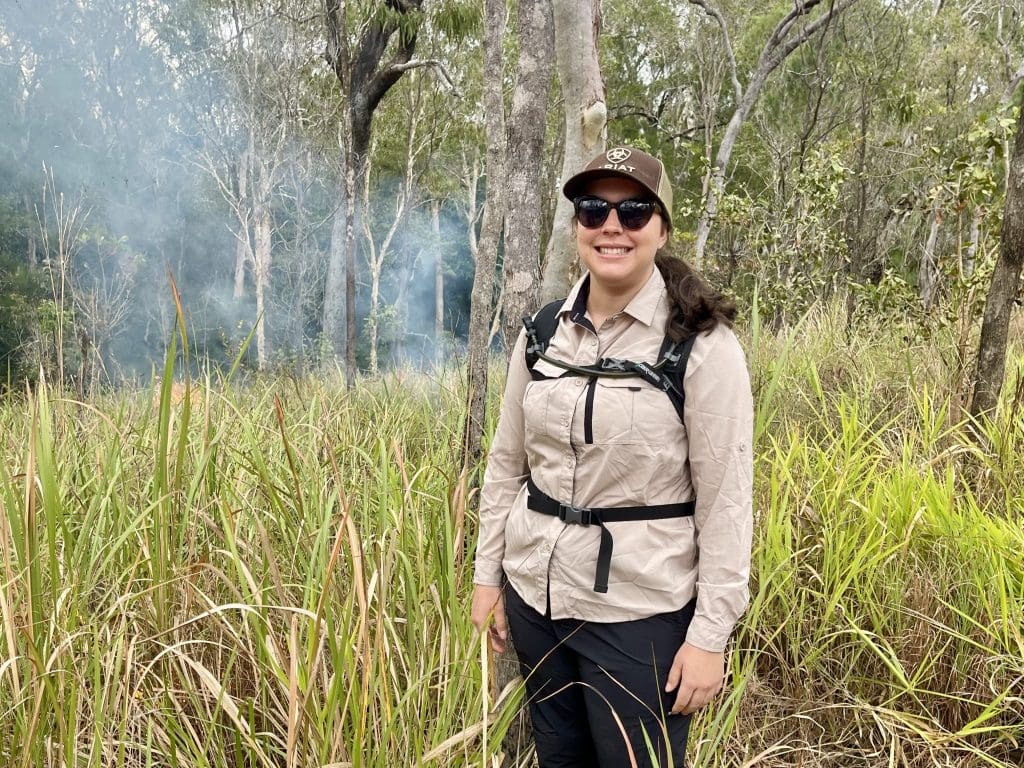
Prior to the main sessions, she joined the Cultural Burn Field Trip led by Tagalaka man Victor Steffensen at Bare Hill, learning on Country about traditional fire management and how soil moisture, plant stages and different types of Country inform burning practices.
“Victor intricately explained the connection between Country and burning, from reading the subtle cues of soil moisture and plant stage to understanding the distinct burning needs of Ironbark Country compared to Paperbark.”
The field trip and three days of presentations also prompted Hannah to reflect on the relationship between Indigenous knowledge and Western science.
“Across every session, a crucial reality became clear: Indigenous knowledge systems are the bedrock of true botanical and medicinal discovery, and caring for Country is essential for a sustainable future that will support generations to come.”
These experiences demonstrate the value of bringing Indigenous knowledge and contemporary research together to strengthen resilience and help communities and landscapes prepare for future environmental and climate challenges.