

Producers across Cape York are building their knowledge of soil health and land management through a local Communities of Practice project delivered in partnership with Cape York NRM and the Annan, Endeavour and Normanby Producer Group.
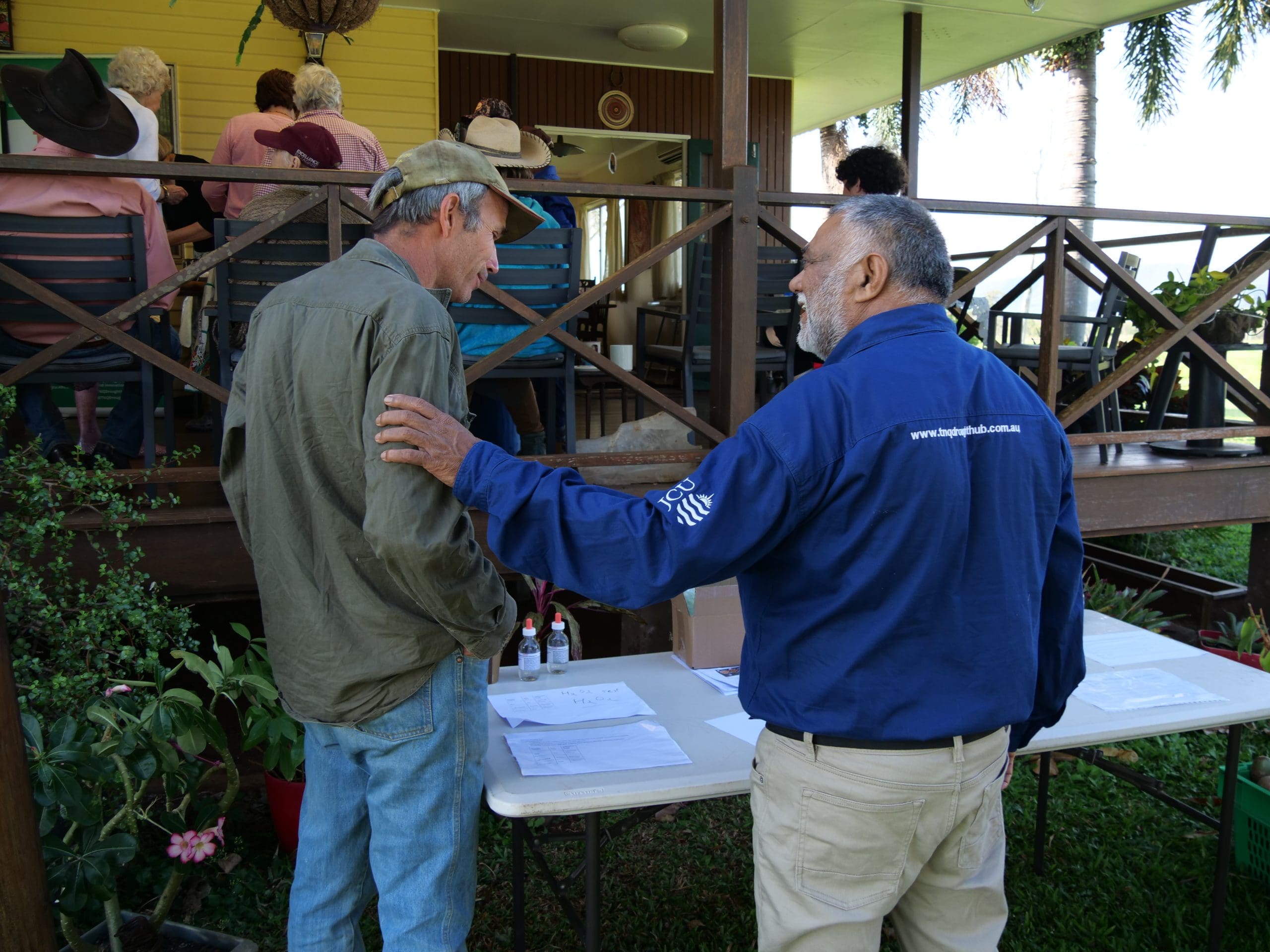
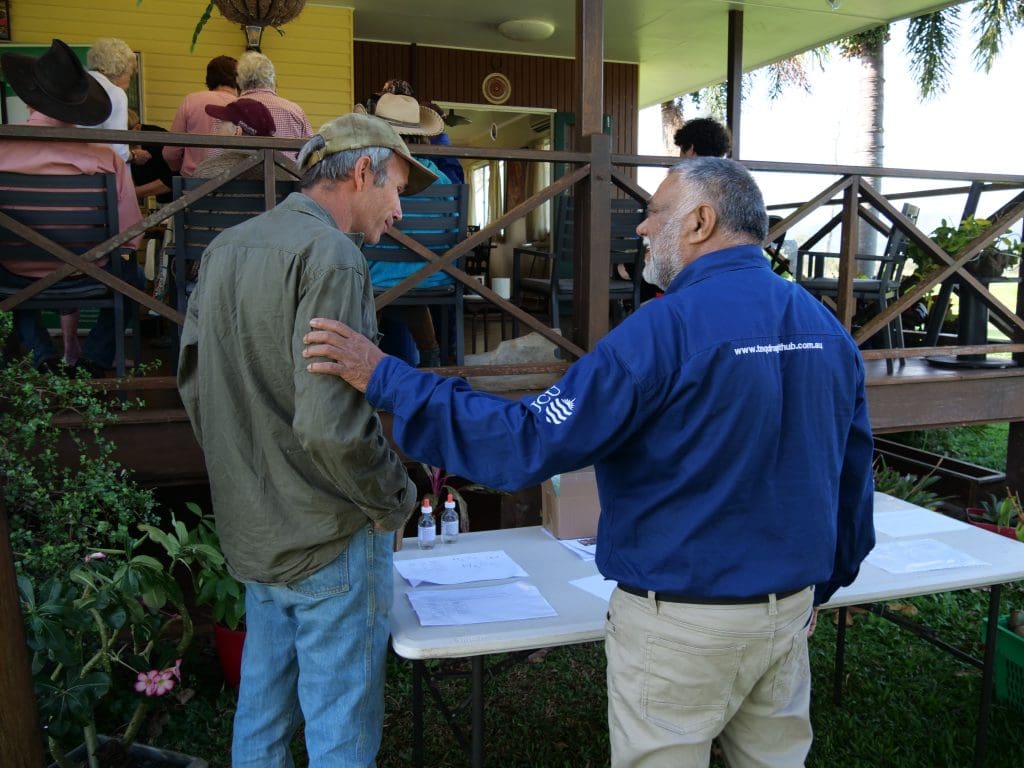
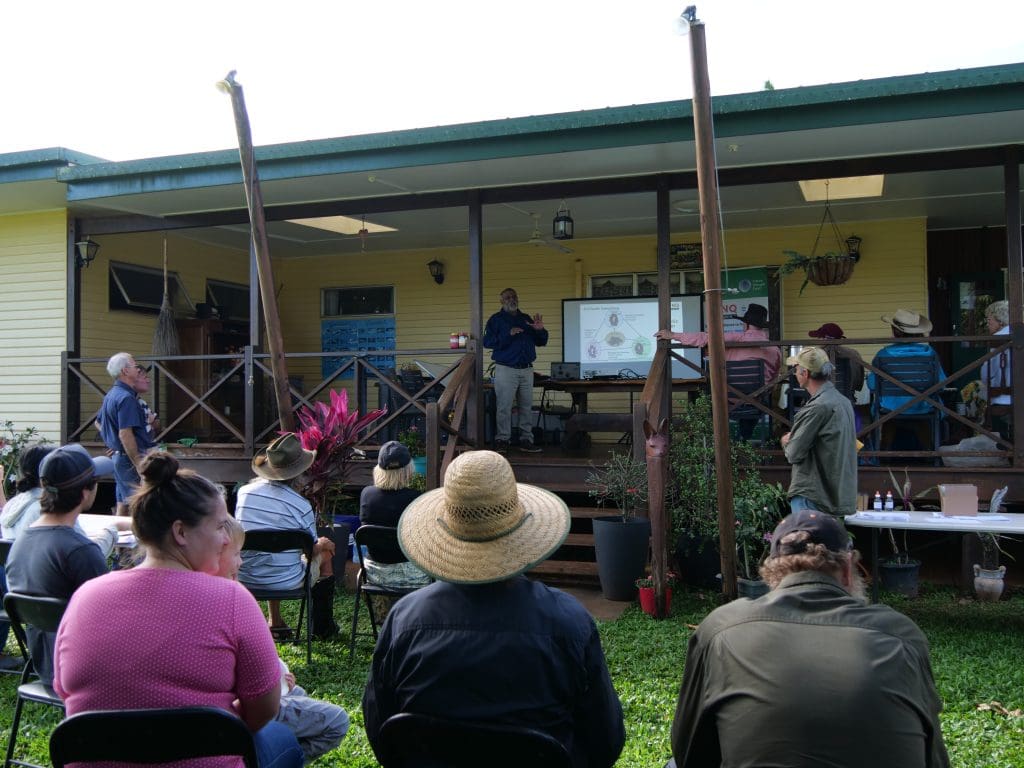
A key activity was the Community Soil Workshop, held in late July near Cooktown. The workshop brought together Indigenous and non-Indigenous graziers and horticulturalists for practical, hands-on learning. Producers brought fresh soil samples from their properties and had the opportunity to learn how to test them themselves.
TNQ Drought Hub Regional Soils Coordinator Dhiraj Gajera, led a session on soil sampling and testing. Rather than simply presenting information, Dhiraj worked alongside producers and guided them through the testing process, giving them practical skills they could take back to their own farms.
The workshop was facilitated by Cape York NRM with assitance form Trevor Meldrum from Cape York Weeds and Feral Animals Incorporated. The hands-on approach sparked lively discussion about the benefits of building local soil knowledge. Producers agreed to take what they had learnt back to their own farms and share it through their networks.
Attendee’s Libby Cook-Black & Stanton Jackson said the workshop, ‘gave us a much deeper understanding of what’s happening beneath the surface and how important that is to the long-term health and productivity of the farm.’
The workshop was part of a broader Communities of Practice approach, which gives producers opportunities to learn from each other, share information and trial new ideas before deciding whether they have a place in their own operations. Regular follow-up visits, meetings and phone discussions have helped keep the project relevant to local needs.
Importantly, producers are helping shape what comes next. Priorities identified through the workshop included further training in soil fungi and microbes, erosion control, soil and water sampling, landscape design and ways to better manage water across the landscape. There was also interest in technologies such as autonomous GPS equipment and other innovative approaches to farm management.
With a mix of graziers and horticulturalists involved, the network is creating opportunities for local knowledge and practical experience to be shared across the region. Producers involved in the project have reported feeling better prepared to communicate and share knowledge about land management, weeds and feral animal control, demonstrating the value of a strong local network.
Thank you to Councillor Marilyn Morris who hosted the workshop at ‘Hazelmere’ in the Endeavour Valley.
This project is supported by the Australian Government through funding from the Natural Heritage Trust under the Climate-Smart Agriculture Program.
The Regional Soil Coordinator is is supported by the Australian Government through funding from the Climate-Smart Agriculture Program under the Natural Heritage Trust and the TNQ Drought Hub through funding from the Australian Government’s Future Drought Fund.