


Background
Across northern Australia, grazing land condition is widely assumed to be declining, placing pressure on the long-term resilience of the beef industry. Healthy land is essential for pasture productivity, business viability, and a property’s ability to cope with drought. However, understanding what is happening across the region has been difficult.
Since the 1970s, grazing land condition data has been collected using different methods and frameworks. This inconsistency makes it challenging to assess long-term trends, identify the drivers of change, or clearly understand where management improvements are most needed. As a result, extension and adoption professionals often lack the consistent, trusted information required to effectively support beef producers.
The TNQ Drought Hub identified an opportunity to bring together researchers, government agencies, NRM groups and industry representatives, to better understand what information people actually need to assess, manage, and improve grazing land condition across the region.
Why this Matters
Strong grazing land condition underpins drought preparedness and long-term resilience in Tropical North Queensland. Producers rely on accurate and relevant information to make decisions about stocking rates, pasture management, and investment in land improvement. Without clear and consistent data, these decisions become harder and risk increases.
For communities and industries, better shared understanding of land condition trends supports smarter extension, more targeted research, and better use of limited resources. It also helps ensure future investment is directed to the areas that will deliver the greatest environmental, economic, and social benefit.
By focusing on user needs, this activity supports more practical, usable information that can be applied on the ground. In doing so, it strengthens the region’s capacity to adapt to climate variability and build resilience over time.
What We Are Doing
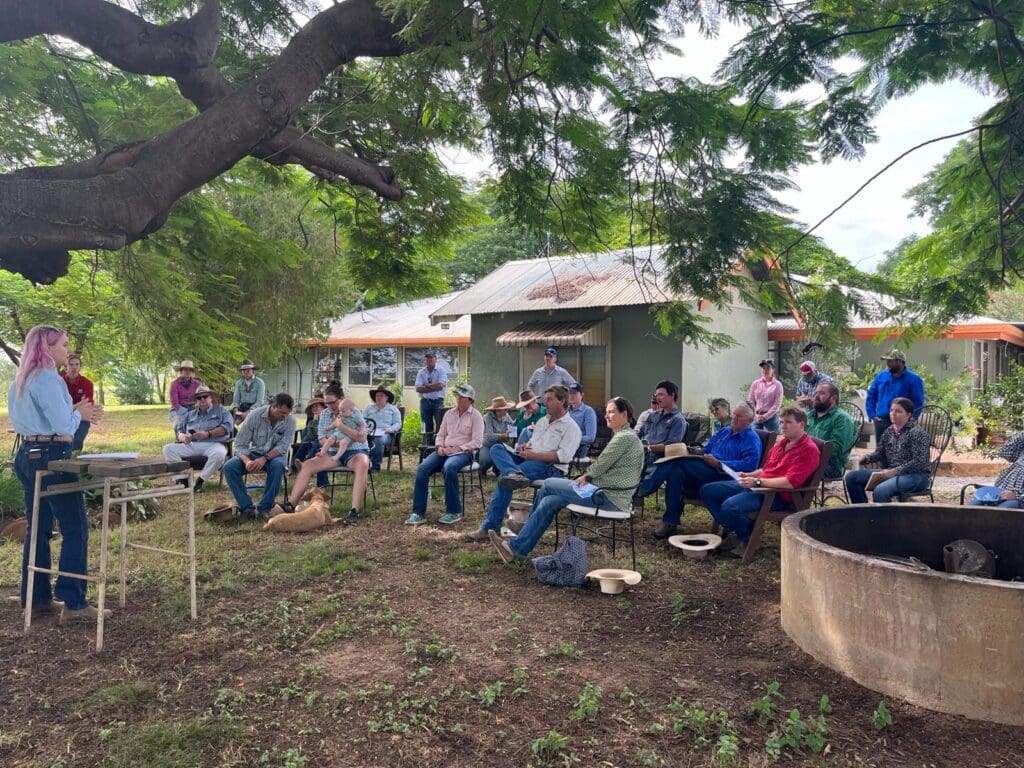
The TNQ Drought Hub is delivering a two-day stakeholder forum focused on grazing land condition in Tropical North Queensland. The forum will bring together a diverse group of participants, including State and Commonwealth government representatives, retired experts, natural resource management groups, universities, private sector specialists, and primary producers.
Through facilitated discussions, participants will identify the key user needs for grazing land condition information and explore current assessment approaches, long-term trends, and the drivers of change. The forum will also highlight data and knowledge gaps and identify priority research and development actions to improve grazing land condition across the region.
A key outcome of the activity is the establishment of an informal network of stakeholders involved in land condition assessment. This network will support improved data and knowledge sharing beyond the life of the forum.
The findings will be synthesised into a publicly accessible report, along with a partnership-based research portfolio that is ready to support future funding and investment opportunities. Together, these outputs will help guide practical action, strengthen collaboration, and support long-term drought resilience across northern Australia.
Project update: Northern Australia University Rangelands Alliance
The TNQ Drought Hub-supported Grazing Land Condition Information activity has evolved into a broader collaboration to strengthen rangelands research across northern Australia.
Early stakeholder engagement identified that significant rangeland research, data and expertise already existed, but was fragmented across institutions and programs. Rather than duplicate existing work, the activity helped catalyse the Northern Australia University Rangelands Alliance (NAURA), bringing together James Cook University, Central Queensland University, Charles Darwin University and the University of Western Australia.
NAURA aims to strengthen collaboration across research, education and industry engagement, drawing on expertise in soil health, grazing systems, water resources, ecology, animal production and digital technologies.
A Steering Committee has been established, with a draft governance framework developed to guide the alliance. The next phase will focus on building an active research network through a seminar series commencing in early 2027 and a proposed collaborative forum in early to mid 2027.
The focus is now on turning shared expertise and industry priorities into collaborative research opportunities and stronger rangelands capability across northern Australia.
If you have any questions about the forum, contact James Cook University Senior Research Officer, Dr Jack Koci: jack.koci1@jcu.edu.au